

Called
forward.
Lutheran Services in America brings together nearly 300 Lutheran social ministries— along with partners, expertise and investment—around a shared purpose: cultivating caring communities that advance health and opportunity for all.
This network—the staff, volunteers and leaders inside each of these social ministries—along with their partners, carry this work forward one relationship at a time.
Together, we reach one in every 50 people in America across 1,400 communities in 45 states.
Through our strategic focus to grow, catalyze and amplify, we help ideas travel, partnerships deepen and investment unlock new opportunities for people and communities across the country.
Lasting change happens when people come together across sectors, disciplines and communities around a common purpose.
We grow so members can serve more. We catalyze so ideas can travel. We amplify so no community is left waiting.
Grow
collective capacity to lead and effect change in communities across the country
Catalyze
innovation and collaboration for impact
Amplify
a united, faith-based voice that shares solutions: what works, why and for whom
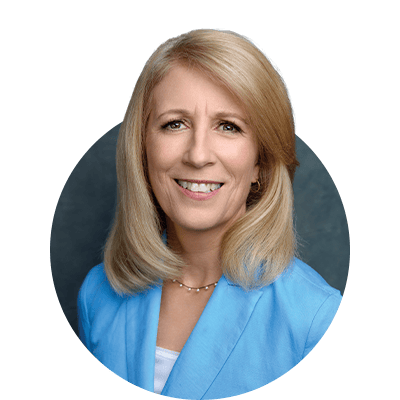
Nationally Recognized Leadership: Lutheran Services in America’s President and CEO Alesia Frericks was recognized by The NonProfit Times as one of the nation’s Top 50 Nonprofit Leaders, reflecting the growing national influence of the Lutheran Services in America network and the work we do together.
A Network Built for Caring Communities.
A Network Built for Caring Communities.
What does it take to cultivate caring communities that advance health and opportunity for all?
It takes a trusted presence built over decades, enduring partnerships and a steadfast commitment to walk alongside people and communities with strength and resilience.
Families finding stability after crisis. Veterans, refugees and new neighbors putting down roots. Older adults aging with independence and dignity. People with disabilities living
lives of choice and belonging. Every day, Lutheran social ministries answer God’s call, strengthening communities with compassion, innovation and hope.
This is what a network built for caring communities looks like: lives changed, communities strengthened and opportunities created through the work we do together.

A Decade of Real Results for Children, Youth and Families
From crisis to stability to agency
Communities across the country face growing needs, yet too many promising solutions remain isolated within individual organizations.
Great ideas should not be limited by geography. If an approach is improving outcomes for children and families in one community, we should be asking how to help other communities across the country benefit from it. That is where Lutheran Services in America leads.
Through the Results Innovation Lab (the Lab) Lutheran Services in America brings together leaders of social ministries to foster partnerships and to develop innovative, data-driven solutions for complex social challenges. We not only foster innovation—we help innovation travel. We create the conditions for proven ideas to move beyond one organization so that more children, families and communities can benefit.
In 2025, the Lab celebrated 10 years of support for leaders of social ministries in our network and their partners, improving the lives of more than 90,000 children and families far beyond providing services; it helped them strengthen how systems work together and how families are supported to lead their own journeys—rather than be managed through them.
The Lab’s impact ripples throughout the Lutheran Services in America network of social ministries, as they carry its innovative strategies to colleagues and community partners—catalyzing and extending our collective reach far beyond any single organization, community or family.
John's Story: Lutheran Social Services of Illinois
For six-year-old John, home changed almost every night. After cycling through multiple foster placements, he entered LSS of Illinois’ Emergency Foster Home program, where he finally found the stability every child deserves.
Through Lutheran Services in America’s Results Innovation Lab, LSS of Illinois strengthened its ability to identify disparities, use data to guide decisions and test what works. Those tools helped stabilize foster placements and address barriers affecting Black youth in care.
The results extended far beyond one child. The average time Black youth spent in foster care decreased by three months, and the racial gap in reunification rates narrowed significantly. John’s journey
to a permanent family reflects both a life changed and a system becoming more equitable.
A Mother's Story: St. John's United
A young mother and her son were rebuilding their lives—moving through shelter, a new school and the housing system all at once. Through Lutheran Services in America’s Family Stabilization Initiative, St. John’s United helped her find a job and secure stable housing. When she arrived at the program’s Gratitude Feast, she brought a pie. “You don’t go to a party empty-handed,” she said.
That simple act said everything about what stability makes possible—not just a roof overhead, but the confidence to contribute, the dignity to give back and the opportunity to belong once again.
The Impact
68
network leaders
900
community stakeholders
1,900
staff
18
communities
15
states
22,000
children, youth & families reach in FY25–26
Through their work in the Lab: Lutheran Social Services of New York increased pediatric well-child visits to 88% for teen mothers and their infants— the program's highest rate to date.
Through their work in the Lab: Upbring (Texas) increased verified kinship foster families by
38%, helping more children remain connected to family, culture and community.
The Catalysts Driving Change
- Through Lutheran Services in America’s Strengthening Families Initiative, members share proven approaches, practical tools and real-world lessons that other communities can adapt. Case studies and issue briefs—including strategies to improve outcomes for children and families experiencing behavioral health challenges—help successful innovations travel farther, so more children, families and communities can benefit.
- Fifty Lutheran Services in America social ministries and a growing number of partner networks are using the Results Innovation Lab’s Community Building Framework—a practical, principles-based approach developed with Chapin Hall to strengthen long-term family and community outcomes.

Rural Older Adults: Supported, Heard and Driving Action
Amplifying lived experience for change
One in four older Americans lives in a rural community, often with limited access to healthcare, housing, transportation and other essential support. Aging in place is increasingly difficult due to provider shortages, long travel distances and fragmented systems. And for too long, the people who know these challenges best—older adults and the family caregivers who support them every day—have rarely had a voice in shaping the policies and programs designed to serve them.
That’s why—from Alaska to Pennsylvania and communities in between—the Lutheran Services in America network of social ministries is working to ensure older adults can age with choice, independence and dignity, and that their voices and lived expertise are shaping the policies and practices that support them.
The Rural Aging Action Network (RAAN) brings together local leaders, older adults and community partners to strengthen rural communities from the ground up. By investing in community-led approaches across Minnesota, Montana, North Dakota and South Dakota, Lutheran Services in America has created the infrastructure for local organizations to do what they do best: listen, partner and act. In FY25–26, those efforts expanded access to care and support for older adults and family caregivers through a whole-person, whole-family approach.
“The distance to care is real—and the cost of that distance is measured in health, housing and connection.”
— Regan McManus, Senior Director of Aging Initiatives, Lutheran Services in America
A Strong Network Changes Lives
Through RAAN, Lutheran Services in America helps rural communities turn lived experience into better policy, stronger partnerships and healthier aging. For example, people with lived expertise who participated in Rural Voices Shaping Transformation—a collaboration among Lutheran Services in America, The SCAN Foundation, Public Policy Lab and The People Say—shared the realities of aging in rural communities to inform policy change.
The report elevates the lived experiences of rural older adults—particularly those eligible for Medicare and Medicaid—to ensure their expertise meaningfully informs decisions that shape care, access and equity.
The stories in the report reveal urgent gaps—but also extraordinary opportunity. Policymakers, faith leaders and advocates can close these gaps by strengthening Home- and Community-based Services (HCBS), simplifying benefit access, aligning resources across sectors and leveraging both technology and trusted local networks to reduce administrative burdens.
Now is the moment for leaders to act to ensure that rural, dually eligible older adults can age with dignity, connection and stability—no matter where they live.
“My dad, he’s worked hard all of his life. There’s a lot of farmers out there that, when it comes to retirement, they don’t end up with a whole lot. There’s not just him out there. I know a lot of ‘em, elderly people that are just barely getting by. If it wasn’t for the Medicaid or the Medicare, they would totally be homeless or they would just die because they wouldn’t have the money for medication.”
— Tiffany, South Dakota
With help from LSA, we were able to take The People Say to new frontiers and visit rural communities that were far more disconnected compared to those we had previously visited.”
Petey Routzahn, Advisor, Public Policy Lab
The Impact
149
community partners mobilized
5
new counties added in 2025
471
older adults reached
135
family caregivers supported
856
services delivered to older adults and 230 for family caregivers
16
rural older adults and six family caregivers whose lived experiences inform national policy
The Catalysts Driving Change
- Rural Caregiver Voices 2026, launched with RRF Foundation for Aging and the National Alliance for Caregiving, equips caregivers with storytelling, leadership and systems knowledge so their lived experiences can help shape future state and national policy.
- This May, more than 10 rural family caregivers brought their lived experiences to Capitol Hill, where they shared their stories directly with federal policymakers to improve understanding of their role and reinforce the need for changes.
- To share the urgency of the situations facing caregivers and older Americans, Lutheran Services in America co-developed two specialized policy reports to share with policy makers: The Invisible Backbone: Supporting Rural Family Caregivers and Rooted in Care: Transforming the Future of Rural Family Caregivers.
“Community based programs like the Rural Aging Action Network are essential for family caregivers. Without this support, I would have been left to navigate caregiving challenges completely on my own. Having someone to explain things, answer questions and provide guidance made all the difference.”
— Ione, family caregiver in South Dakota
Voices like Ione’s help shape how Lutheran Services in America and the RAAN respond to rural communities. By listening first, RAAN leaders build trusted relationships that help older adults and family caregivers navigate everyday challenges with dignity and confidence.
That listening matters because family caregivers are the backbone of our health care system—providing an estimated $1.01 trillion in unpaid care each year and serving as essential partners to both patients and providers. Yet their expertise is rarely tapped beyond their own households.
Lutheran Services in America is changing that: helping rural family caregivers turn their lived experience into leadership and advocacy, so the people closest to the challenge have a voice in shaping the response to it.
Working alongside Lutheran Services in America on the Rural Voices Shaping Transformation initiative is helping bring lived experience into conversations about policy. By centering the voices of rural older adults, this work is helping ensure that the people who know these challenges best are informing the solutions.”
Kali Peterson, Director of Policy and Programs, The SCAN Foundation

Championing Full and Meaningful Lives for People with Disabilities
A stronger network means a stronger voice — and improved lives
For more than seven million Americans living with intellectual and developmental disabilities, thriving in the community depends on more than access to services. It depends on organizations that can adapt to changing needs, advocate effectively and continually improve the supports that help people live lives of choice, belonging and opportunity.
But as national policies evolve, workforce shortages persist and systems grow more complex, no single organization can meet these challenges alone.
That’s why Lutheran Services in America’s Disability Network exists. Bringing together 22 faith-based health and human services organizations across 30 states, the Disability Network strengthens advocacy, advances innovation and equips leaders to respond to change. Through trusted relationships and shared learning, Lutheran Services in America helps ideas, expertise and proven solutions spread across the Disability Network—so more people with intellectual and developmental disabilities, and their families, can benefit.
A Strong Network Changes Lives
Through the Disability Network’s Host Home & Shared Living Work Group, Lutheran Services in America brings leaders together to share ideas, solve common challenges and learn from one another. Together, they strengthen provider recruitment, improve quality and expand person-centered supports—so more people with intellectual and developmental disabilities can belong and thrive in the communities they call home.
For AbleLight, the LSA-DN is about more than meetings. They are about relationships, collaboration, and learning from leaders across the country who share a commitment to Lutheran social ministry for people with intellectual and developmental disabilities (IDD). For Raegan Gyorffy, Area Vice President, Clinical Services & Quality, those connections created an opportunity to share challenges and learnings together to inform and guide practice that improves outcomes for people with disabilities and their families.
“In the beginning it was the networking and general strategy for myself— but now it’s specifics and connecting more opportunities for my team memebers.”
— Keith Jones, CEO, AbleLight
The Impact
30
states
22
member organizations
42
leaders
The Catalysts Driving Change
- Rural Caregiver Voices 2026, launched with RRF Foundation for Aging and the National Alliance for Caregiving, equips caregivers with storytelling, leadership and systems knowledge so their lived experiences can help shape future state and national policy.
- This May, more than 10 rural family caregivers brought their lived experiences to Capitol Hill, where they shared their stories directly with federal policymakers to improve understanding of their role and reinforce the need for changes.
- To share the urgency of the situations facing caregivers and older Americans, Lutheran Services in America co-developed two specialized policy reports to share with policy makers: The Invisible Backbone: Supporting Rural Family Caregivers and Rooted in Care: Transforming the Future of Rural Family Caregivers.
One of the things I value most about LSA-DN is its ability to bring organizations together. They ensure our voices are heard, connect us with peers facing similar opportunities and challenges, and strengthen our ability to make a meaningful impact in our communities.
Our board has had the opportunity to engage in meaningful discussions about the issues affecting our work at the federal, state and local levels, and to gain a great understanding of the importance of having a collective voice in shaping policy and advocating for the people we serve.”
Deb Lyle, Vice President Disability Services, Graceworks Enhanced Living
Called Forward
A Network Built for This Moment.
Called Forward
A Network Built for This Moment.
For generations, Lutheran social ministries have been called forward to meet the needs of their communities.
This moment is no different. Across the country, Lutheran social ministries are stepping forward to answer their faith’s call—and Lutheran Services in America is ensuring they can do so: growing their capacity to serve, amplifying their collective voice in national conversations that directly affect the people they support, and building and catalyzing their partnerships that strengthen communities.
This is what a network built for this moment looks like. It strengthens individual and collective leadership, drives innovation and impact across our network, sharpens our unified, faith-based voice to elevate solutions and leverages our society’s trust in faith-based service providers.
In a recent national survey conducted for Lutheran Services in America, more than half of US adults (53%) said they are confident faith-based organizations provide quality care while maximizing resources.
Committed to Fostering Leadership and Growth
Supporting essential partners in a changing landscape
Today’s environment asks a great deal of Lutheran social ministry leaders. And Lutheran Services in America is committed to ensuring they don’t face things alone—creating the spaces, the peer networks and the learning communities where leaders find not only resources, information and skills, but each other.
With the launch of our Leadership & Growth Platform, Lutheran Services in America is not only supporting leaders as they navigate the moment we’re in, but equipping them to lead through it—with greater confidence, timely and essential information, sharper strategies and the knowledge that they are connected to 300 peer organizations that are navigating the same terrain.
The 2026 Summit—themed “Bold Leadership and the Art of Resilience”—brought together senior leaders from across the social ministry network for honest conversation, shared learning and renewed conviction. The Summit achieved a Net Promoter Score of 9.44—a measure not just of satisfaction but of value.
The biggest value is I can look to other sectors and get bright spots or ideas of what’s working that isn’t usually in my sector—and this greatly helps my own reflection.”
— Chris Singer, President & CEO, Lutheran Church Charities
The Impact
4+
peer networks focused on timely issues including technology, AI,
and finance.
20+
webinars and learning sessions
350+
C-suite leaders engaged annually
The Catalysts Driving Change
- Lutheran social ministry leaders in our network were equipped with timely information in order to understand the implications of private equity in healthcare, via Lutheran Services in America’s substantive brief, Private Equity in Healthcare: Balancing Capital and Care.
- Opportunities to use new technology are significant and evolving rapidly. To help leaders respond, Lutheran Services in America provided practical tools through its AI and innovation portfolio, including governance frameworks, ethics guidance and co-design principles. Convenings in Seattle and San Diego extended that learning into the field, helping social ministry leaders adopt new technology responsibly and in alignment with mission.

Amplifying One Network with One Voice
Impacting the systems that impact lives
Across a rapidly shifting federal landscape, Lutheran Services in America’s Public Policy and Advocacy work exists to help the 300 social ministries in our network speak with a single, credible, faith-based voice on the issues that most directly affect their communities and the people they serve.
Right now, that means addressing challenges and opportunities with the only constant being change:
- ensuring access to care by defending and strengthening Medicaid;
- advocating for a strong workforce;
- expanding the supply of affordable and healthy housing;
- leveraging a cross-cutting focus on data and technology, including AI.
Regardless of the issue, we focus on two goals. First, we equip leaders with the skills and confidence to advocate effectively, regardless of prior experience. Second, we turn strategy into action by creating direct opportunities to engage with policymakers in Washington, DC. The result is a nationwide network of Lutheran social ministries that is stronger, more visible and more influential each year.
Here We Stand: For People. For Care. For Medicaid.
In the face of significant national policy uncertainty, Lutheran Services in America launched the Here We Stand initiative, boldly reasserting our commitment to work that is rooted in the inherent dignity of every person. The campaign unites providers, community leaders, advocates and partners to protect access to Medicaid, elevate trusted local voices and advance practical solutions that strengthen communities.
In 1521, Martin Luther stood before power and declared, “Here I stand. I can do no other.” Today, that same moral clarity calls us not toward division, but toward defending the dignity, health and wellbeing of people and communities. We are grounded, present and unwilling to be silent.
Here We Stand provides timely resources and practical guidance that help Lutheran social ministries and their partners navigate change with confidence while keeping the people and communities they serve at the center of every conversation.
The Impact
44
spokespeople trained
9M
earned media impressions
381K
digital ad impressions
327
influencer impressions
Lutheran social ministries' knowledge of priority— and their ability to advocate for them— was strengthened considerably this fiscal year, with the number of engaged ministries increasing by 6%, those with high levels of engagement increasing by 4%.

The Catalysts Driving Change
- Action begins with education. Our ongoing monthly forum on policy and advocacy, Capitol Conversations, drew 331 unique registrants across the year’s webinars. Going forward, Capitol Conversations will expand its reach to partner organizations and broaden its topics to include housing and workforce. Capitol Communications, our biweekly advocacy update, reached roughly 2,000 people every week.
- Lutheran social ministries are essential partners in navigating changing federal and state Medicaid landscapes. Lutheran Services in America launched Partnering for Impact, an effort aimed at improving partnerships between health and social services to improve health outcomes for people and communities. It includes the Partnering for Impact Guide: How Social Service and Community-based Organizations Can Navigate Change in the New Medicaid Landscape, the first of its kind, designed to help social service organizations and community-based organizations demonstrate they are essential partners and critical infrastructure in achieving better health, with stronger efficiency while containing costs.
- Social ministries in our network were supported in measuring what matters most to improve outcomes for the people they serve with the release of Making Sense of Behavioral Health Measurement.
Sign up to receive Capitol Communications.
A Network Built for What’s Next.
A Network Built for What’s Next.
Lutheran Services in America exists not just to support what our network is already doing—but to identify the practice, policy and systems innovations working in one community and ask how they could work in a hundred more. We marshal resources and strengthen infrastructure that allows promising ideas to travel across geographies, populations and contexts.
It takes more than individual programs to ensure every family is stabilized, every elder ages with dignity and every child finds permanence. It takes a network, called forward.
This is what a network built for what’s next looks like: innovations scaled, collaborations catalyzed and resources channeled for nationwide impact.
Increasing Health Through Housing
Catalytic capital, investment-ready housing with services—at scale
- 37.1M American households are cost-burdened
- 53% of older renter households are financially strained (4.7M households)
- People experiencing housing insecurity are nearly twice as likely to report poor health.

Many organizations understand the importance of housing and supportive services philosophically— far fewer have developed the operational and financial frameworks to make those models sustainable at scale.”
Cyrus Batheja, President & CEO, Ecumen

Our Work in Action
The following case studies illustrate the kinds of projects Lutheran Services in America is helping to accelerate through catalytic capital, technical assistance and strategic partnerships—creating models that can be replicated across the network to expand affordable housing with services.
Land, trust, services, capital. Rarely do all four come together in a single project. Yet when they do, communities can create housing solutions that transform lives. Read how Inspiritus demonstrated what is possible when these four elements came together to transform an underutilized opportunity into affordable housing for older adults and people with disabilities.
Read how Grace Village, in partnership with California Lutheran Homes, transformed a congregational commitment in the heart of Santa Barbara into 58 units of affordable senior housing.
The Catalysts Driving Change
- Lutheran Services in America’s Health Through Housing initiative took a significant step in its evolution to scale affordable housing solutions by establishing a Flexible Loan Fund, securing seed funding and developing a national fundraising strategy. Our aim is to grow this initiative by securing $25 million by FY29 to expand service-enriched affordable housing for people across the country. Through complementary program-related investments (PRIs) and philanthropic investments, Health Through Housing combines early-stage capital with technical assistance, church and community partnerships, and national coordination—creating the conditions for more affordable housing projects to move from vision to construction.
- Lutheran Services in America acknowledges the inaugural Housing Leadership Circle members, who’ve seeded our effort to achieve our goal: California Lutheran Homes, Lutheran Church Extension Fund, Mission Investment Fund, Lutheran Community Services Northwest, EverTrue, and Lutheran Services Carolinas and CareAxis.
- Five social ministries representing Nebraska, Minnesota, Michigan, Georgia, and New York were selected for the inaugural Health Through Housing Cohort. Drawing on the Results Innovation Lab model, the 26-week cohort experience equips leaders with technical assistance, peer learning, church and community partnerships, and access to catalytic capital to move housing projects from concept to investment-ready opportunities, culminating in a capstone presentation to potential investors.
The Moment is Now!
next.
next.
Looking ahead, our greatest opportunity is to continue evolving Lutheran Services in America from a network that connects—to an infrastructure that drives change at scale.
The challenges facing our communities—significant cuts to public funding reducing access to care, housing unaffordability, workforce shortages and economic uncertainty—are too large for any one organization to solve alone. They require a trusted network that can connect leaders, mobilize partners, attract investment and spread proven solutions across communities.
In the years ahead, we will continue strengthening the capacity of Lutheran social ministries to lead in their communities.
Our next chapter will build on the momentum highlighted throughout this report.
- Health Through Housing will grow to $8 million in FY27 and $25 million by FY29, creating a national investment platform that combines philanthropic and catalytic capital to expand service-enriched affordable housing for 17,000 people in communities across the country.
- The Results Innovation Lab will build on a decade of learning to accelerate how proven innovations spread across our network and beyond.
- The Rural Aging Action Network will scale community-driven approaches, helping more rural communities strengthen healthy aging and support family caregivers.
- Our Leadership & Growth Platform will continue preparing leaders with the relationships, knowledge and practical tools they need to navigate change.
- Here We Stand will continue to mobilize our trusted faith-based voice, elevate practical solutions and shape policy on Medicaid, housing, workforce and the issues that determine community well-being—while creating new pathways for people with lived experience, ensuring the solutions we advance are shaped by the people and communities.
These initiatives are not independent efforts. Together, they represent the evolution
of Lutheran Services in America into a national platform for change.
Together, we are answering the call—and cultivating caring communities that advance health and opportunity for all.