

Ten years ago, the Results Innovation Lab began with a belief that still guides the work today: children and families are better supported when leaders learn together, use data differently, and stay focused on what families need to thrive.
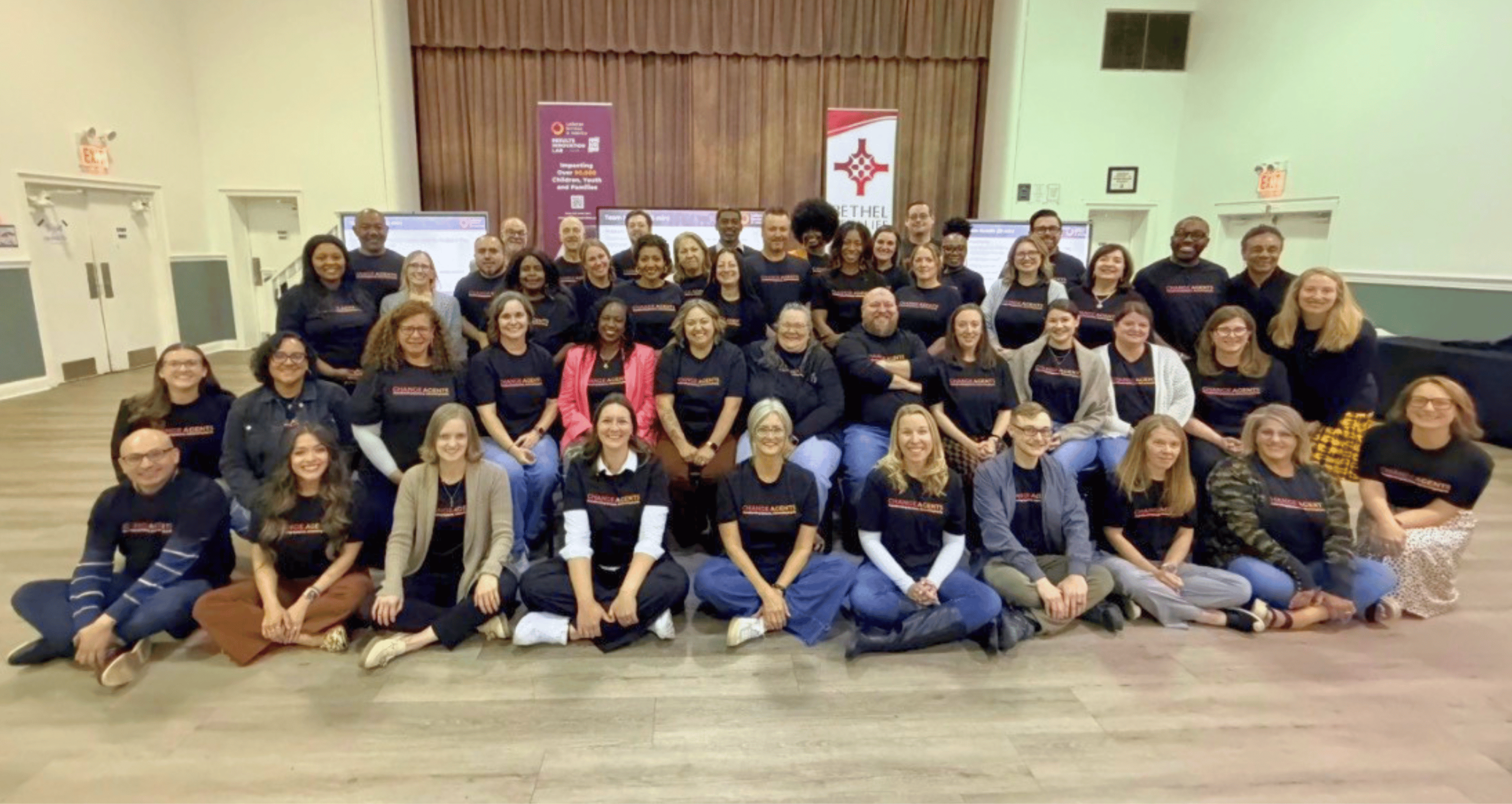
The Results Network annual convening, which took place last month at Bethel New Life in Chicago, brought together more than 50 leaders from 17 organizations and 14 states across the Lutheran Services in America network. As Lutheran Services in America marks the 10-year anniversary of the Results Innovation Lab, this convening reminded us of where the work began and why it still matters.
What did we learn?
- Peer learning helps teams see what they cannot see alone.
The Results Network brings leaders together to leverage data, test ideas, learn in community, and move from intention to impact. For the past 10 years, the Lab’s collaborative learning model has created space for leaders to learn with and from one another, implement small tests of change, and apply what they are learning in real time. As one longtime Results Network participant reflected, “The last eight years and this group have provided me more growth than any other experience I have had. It has given me strength and courage and the resilience to keep going.”
- Resilience has to be built into the way we work.
Throughout the convening, resilience was not treated as a separate topic from the work. It was part of the work itself. Workforce conditions are not separate from family outcomes. The way organizations support their teams affects how families experience services, how strategies are implemented, and how prevention efforts take root. Dr. Darius Tandon, professor at Northwestern University Feinberg School of Medicine, explored with participants the mounting pressures facing the health and human services field and offered practical frameworks and evidence-based strategies for building workforce resilience, including community co-design principles and stress management intervention.
- Co-creating solutions with staff strengthens outcomes.
Participants prioritized workforce best practices such as aligning resources to more efficiently support workforce and co-creating solutions with staff. Lutheran Social Services of New York now has all levels of program staff participating in their Solutions Lab and ongoing development of an internal quality assurance tool. At Lutheran Child and Family Services of Indiana/Kentucky, the entire team is now involved in data reporting to increase understanding of the importance and use of data with funders and partners to sustain programs. So far, this has led to 63% of annual goals being met within the first quarter and a noticeable decrease in stress from the team.
- Lived experience strengthens strategy.
When leaders listen to the people closest to the work and the people most impacted by systems, strategies become more responsive, practical, and sustainable. Bethel New Life brought together a panel of local leaders to share stories of grassroots partnership and key principles that can apply to other organizations. Panelists reflected on what it means for lived experience to shape programs and strategies, not just respond to them. They also challenged leaders to consider what it looks like when work is done with communities, rather than to communities.
- Prevention requires attention to both strategy and workforce.
The Results Network continues to focus on developing and strengthening the prevention continuum. Teams participated in a gallery walk where they shared their Resilience and Results Plans with one another. Bethel New Life shared how they recently developed a community ambassador role to increase referrals from community partners and build trust with families. Lutheran Services in Iowa highlighted plans to leverage staff skills developed through training to increase staff confidence in providing preventative services and increase access to preventative home visiting services across the state.
The convening closed with teams naming what they would carry forward from the year and identifying commitments to strengthen their work, including increasing intentional listening practices to elevate community voice, strengthening transformational partnerships, and holding team members accountable to reflection and curiosity. When leaders learn together, communities can help shape the work, and organizations stay focused on creating the conditions that help children and families thrive.
Renada Johnson is Senior Director of Children, Youth & Family Initiatives at Lutheran Services in America.