

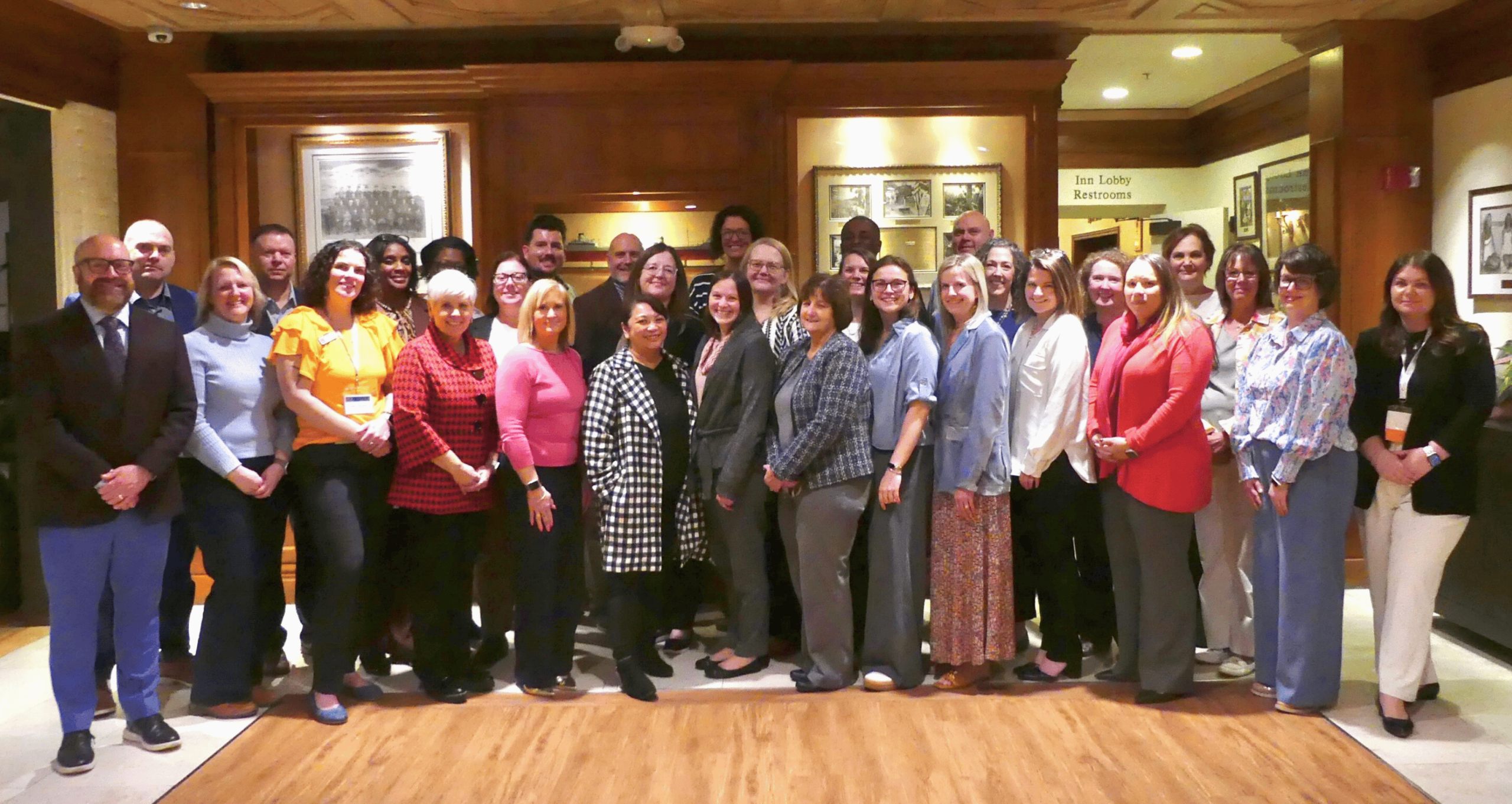
The Dragonfly’s Journey: Reflections from the 2026 Disability Network Winter Meeting

March 12, 2026

Leaders from across the Lutheran Services in America Disability Network (LSA-DN) gathered for the 2026 Winter Meeting for two days of connection, reflection, and forward-looking conversation about the future of services for people with disabilities. The gathering opened with a reminder that our work is ultimately about people, dignity, and family. Participants reflected on the importance of sustaining themselves and one another in this work while continuing to pursue the shared mission of strengthening communities and expanding opportunity for those we serve.

Throughout the meeting, members engaged with national leaders, policy experts, and one another to explore the evolving landscape related to Medicaid, including long-term services and supports (LTSS) and home- and community-based services (HCBS). Conversations highlighted both the challenges and opportunities ahead, from workforce shortages and budget pressures to innovation in care models, technology, and value-based approaches that prioritize quality of life and independence. Members also celebrated the growing impact of Lutheran Services in America initiatives that are driving system changes across the country, reaching tens of thousands of children, youth, and families while elevating community voice and equity in policy and practice.

Above all, the meeting reaffirmed the strength of the Lutheran Services in America network. By sharing insights across states, learning from emerging models, and advocating together for strong community-based services, members continue to demonstrate the power of collaboration in advancing dignity, independence, and belonging for people with disabilities and their families.

We closed our time together with a devotion reflecting on the dragonfly’s journey from dark waters to flight, a reminder that even in uncertain times, leadership grounded in courage, faith, and care can help our communities rise toward light.

Bill Kallestad is Senior Director of Public Policy and Advocacy for the Lutheran Services in America Disability Network.

CMS Final Medicaid Access Rule — Action Moves to States

May 29, 2024

What: In April, the Centers for Medicare & Medicaid Services (CMS) released the final Medicaid Access Rule. As you know from our recent update, many of our shared concerns across the network were not addressed in the final rule, including new requirements related to payment of the direct care workforce. Specifically at least 80% of all Medicaid payments must be spent on compensation for direct care workers and/or states must report annually on percent of payments that go to the direct care workforce.  Other provisions also include changes in access to home- and community-based services (HCBS), health and safety protections, and quality measures.   Given the scope and impact on our work and services, our work continues and also moves to the state level.

What Happens Now? Because the Access Rule requires states to make significant changes to their Medicaid programs, CMS is allowing states several years to implement the provisions. This is a time to consider strengthening your discussions with state-level decisionmakers to inform the implementation of the provisions.

Under the rule, states are required to create home care and rate-setting advisory boards made up of Medicaid beneficiaries, home care workers and others to advise states on provider payment rates and worker compensation. Thus, its important to be in conversation with state-level officials to inform the make-up and considerations of these boards. We will continue conversations with CMS as we learn more about guidance, timing and other considerations.

How to prepare: Given the rationale for the rule change is to improve job quality and pay for direct care workers to attract more people to those jobs, it will be important to articulate the impact to your organization, including how this makes it harder to deliver quality services. The rule will also require states to be more transparent in how they pay for home- and community-based services, as well as how they set rates.

The following are the key components of the rule to be aware of:

  1. at least 80% of all Medicaid payments must be spent on compensation for direct care workers and/or states must report annually on percent of payments that go to the direct care workforce,
  2. states must report information on HCBS wait lists (specifically timely and full access to services),
  3. prioritization of person-centered planning,
  4. states must demonstrate an electronic incident management system,
  5. states must establish and manage a grievance process and
  6. states must report on a set of nationally standardize quality measures.

For more information, please contact Bill Kallestad.

Bill Kallestad is the Director of Public Policy and Advocacy for the Lutheran Services in America Disability Network.

Supporting
Our Neighbors,

TOGETHER.

Our shared Lutheran tradition of service to our neighbor is more vital than ever.

Join us as we work to ensure our network continues delivering essential services to all in need.