Major Policy Developments Shaping Medicaid, Housing and Workforce

June 15, 2026

With midterm elections within sight this November, Congress will be working ahead of the August recess with a focus on our key policy priorities, including:

  • Medicaid: Reconciliation 3.0 poses more risk to Medicaid coverage and access
  • Expanding access to affordable housing: 21st Century Road to Housing Act – will the Senate Act?
  • Addressing health and direct service workforce shortages

More Medicaid Cuts?

Reconciliation 3.0

Federal policymakers are increasingly turning their attention to finding savings through additional healthcare cuts including to Medicaid to generate savings as the war with Iran continues. As part of a potential third reconciliation package (“Reconciliation 3.0”), which could advance later this summer, provisions related to Medicaid could include new program integrity measures and eligibility restrictions that could reduce coverage. This is on top of the significant cuts and program changes enacted as part of the first reconciliation bill, HR 1, which are still unfolding.

States Implement Work Requirements

At the same time, new federal guidance from CMS is moving forward with expanded work reporting requirements, which will require more frequent eligibility verification and potentially limit exemptions for medically frail individuals. Together, these developments increase administrative burdens for providers and create new barriers for patients in maintaining coverage. We encourage members to stay engaged and make their voices heard.

Take Action: Join your peers in telling Congress “no more cuts to Medicaid”. You can use our quick and easy advocacy tool to write your lawmakers and urge them to oppose any further cuts to Medicaid.

Expanding Access to Affordable Housing

House Advances Road to Housing

The House recently passed the bipartisan 21st Century ROAD to Housing Act, marking a significant step toward addressing the nation’s affordable housing shortage. While the legislation includes efforts to promote local zoning reforms and expand housing development, the House-passed version eliminated proposed incentive programs.

Now What?

Attention now turns to the Senate, where leaders have indicated that additional work is needed before a final agreement can be reached.

Yes in God’s Backyard

At the same time, we continue to advocate for “Yes In God’s Backyard” (YIGBY) legislation, which aims to   ease faith‑based land conversions for affordable housing development. Action on this effort is increasingly moving to the various states, with eight states having already passed some version of this bill, including Washington, California, Oregon, Minnesota, Maryland, Hawaii, Florida, and most recently in Virginia.

Addressing the Workforce Shortage

Because workforce shortages remain a significant concern across the health and human services sector, we continue to support efforts to strengthen the pipeline of healthcare and direct support professionals, including by removing barriers for internationally trained workers through the Healthcare Workforce Innovation Act.

Nursing Professional Designation Downgraded

At the federal level, a new policy change excludes most nursing programs from the definition of a “professional degree.” This action has prompted a lawsuit from major nursing organizations. If upheld, the change could limit access to federal student loans for advanced nursing education, with potential downstream effects on workforce supply at a time when shortages are already acute.

We will continue to monitor these developments closely and keep you informed as the policy environment evolves in the months ahead.

Sue Polis is Vice President of Public Relations and Government Affairs at Lutheran Services in America. Sarah Dobson is Senior Director of Advocacy and Public Policy at Lutheran Services in America.

A New Strategy to Turn Housing Potential into Reality

June 15, 2026

Across our network, member organizations are sitting on something powerful: community trust, mission-driven infrastructure, and in many cases, land and property that could become affordable housing with services for young families and older adults.

Health Through Housing is Lutheran Services in America’s national strategy to turn that potential into reality. Through a flexible predevelopment loan fund, a peer learning cohort designed to get members “loan ready,” and partnerships that align capital with community need, we are building the early-stage support that makes housing projects move from blueprint to breaking ground.

Whether your organization is actively pursuing housing development or just beginning to explore what’s possible, this strategy was built with you in mind. Watch for more details on our Health through Housing strategy this summer, and reach out if you want to learn more about how Lutheran Services in America can help your organization take the next step. Contact Sarah Haight at Shaight@lutheranservices.org.

Sarah Haight is Vice President of Program Planning & Growth at Lutheran Services in America.

Here We Stand: Coming Together with New Resources

May 14, 2026

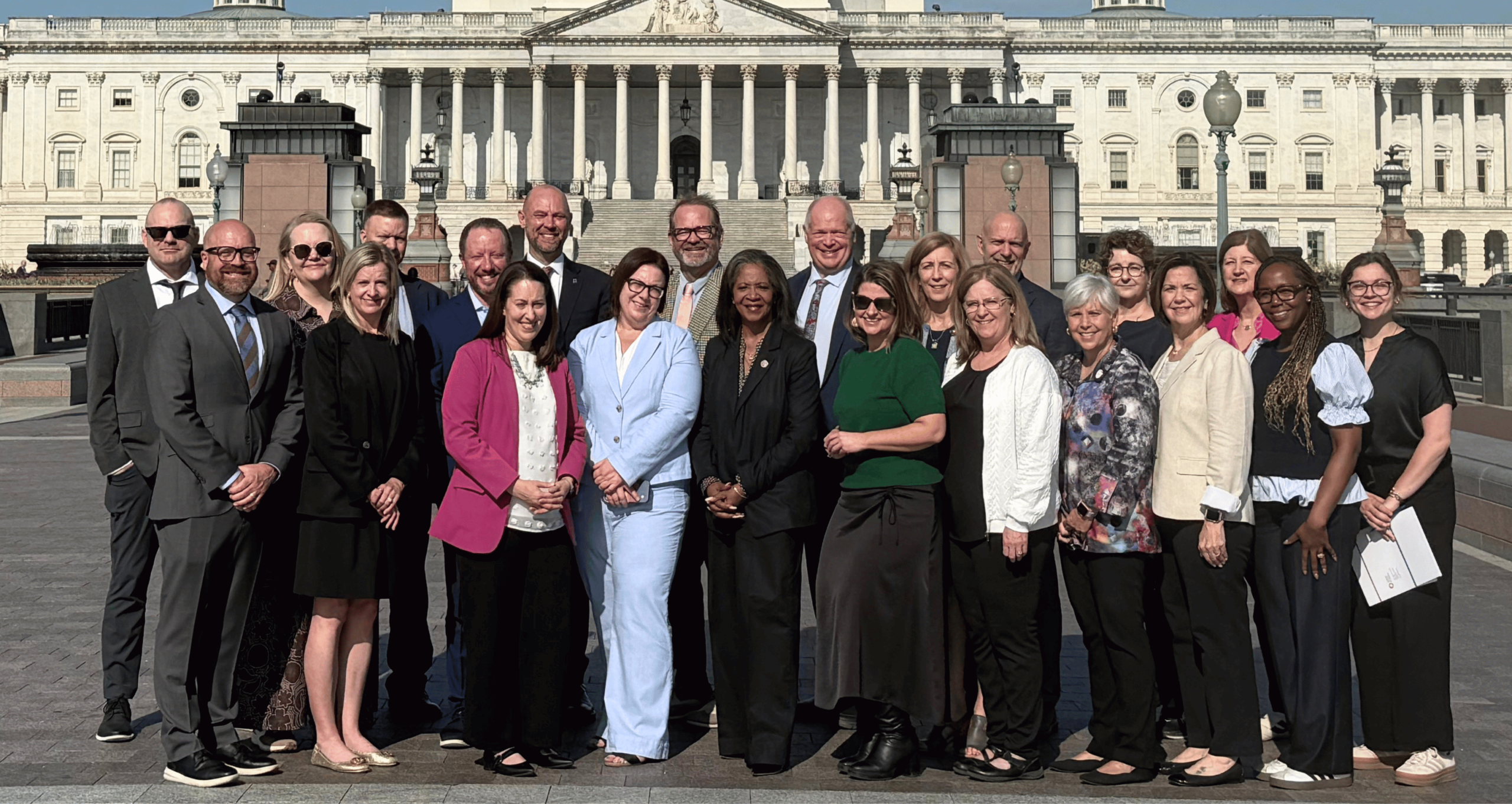
On April 23, Lutheran Services in America network members from our Policy and Advocacy Committee, the Disability Network, and the board of directors convened in Washington, D.C., for a day of meetings with Congressional offices. Nineteen member organizations were represented, and over 40 meetings were conducted in total.

Our Asks? No more cuts to Medicaid. Support for Workforce and Housing.

As part of our recent re-launch of our Here We Stand campaign to protect Medicaid, network members went to the Hill with three primary asks:

What can you do?

This is a pivotal moment as we work on two fronts:

  • Federal: Congress is considering a third budget reconciliation bill that may mean even deeper cuts to Medicaid. Learn more and take action.
  • State-level efforts: Whether your state is already working on implementation of H.R. 1 provisions including work reporting requirements and limitations from provider tax constraints, state budgets are tightening and most will be trying to do more with less.

Also consider the following:

  • 5/21: Join our May Capitol Conversations webinar to learn more about future budget reconciliation efforts.
  • Sign-up for one-on-one consultation to review updated Here We Stand. Resources and options for action. to review updated Here We Stand. Resources and options for action.
  • Use our new Here We Stand resources to engage with lawmakers and the media. Materials include:
    • Medicaid Brief: Backgrounder on state fiscal challenges, Medicaid program integrity and waste, fraud and abuse.
    • Action Guide: Suggested ways you can engage policymakers at the state or federal levels.
    • Medicaid FAQs: Frequently asked questions and answers about the importance of Medicaid, policy impacts, and the Here We Stand campaign.
    • Messaging for Federal Lawmakers: Suggested messaging for meetings with members of Congress (House and Senate).
    • Messaging for State Lawmakers: Suggested talking points for your meetings/engagements with state lawmakers and officials.

Please contact the Lutheran Services in America government relations and public policy team:

Sue Polis
Sarah Dobson
Bill Kallestad
Kylie Bowlds

Support with communications efforts:

Christopher Findlay


Sarah Dobson is Senior Director of Advocacy and Public Policy at Lutheran Services in America.

Health & Housing Strategy Update

January 30, 2026

Lutheran Services in America’s health and housing strategy continues to gain momentum through the insights and input of our member-driven Housing Solutions Collaborative. After 18 months of shared learning, partnership, and design, we are nearing fruition on a key initiative: the launch of the LSA Flexible Loan Fund. The Fund provides Lutheran Services in America members multiple opportunities to participate, whether as Program Related Investment (PRI) investors, or joining a new, targeted cohort focused on helping members become “loan ready” with projects poised to move from concept to “shovel ready.”

Additional elements of our strategy include working more closely with churches in local communities as trusted partners as they consider new uses for underutilized property to expand affordable housing.

The bi-monthly Housing Solutions Collaborative is an open and energizing space to engage in innovation across the network, advancing solutions that ensure people in our communities have access to safe, stable housing with the services and supports they need to thrive.

To join the Collaborative or learn more about our health and housing strategy, contact Susan Newton at snewton@lutheranservices.org.

Susan Newton is Senior Director of Strategic Initiatives at Lutheran Services in America.

What We’re Expecting in 2026: Takeaways from our Capitol Conversations

January 29, 2026

As 2026 begins, many forces, especially in changes to federal policy, are further shaping an already challenging landscape. With a one-seat Republican majority in the House, will compromise be the order of the day? That question looms, along with a key government funding deadline, and rising concerns about further impacts in access to care with the ACA tax credits expired. In our January Capitol Conversations webinar, we examined federal policy developments across our three priority areas — Medicaid, workforce, and health and housing — with a clear takeaway: decisions in Washington will have immediate, real-world impacts on providers and the communities they serve. Here are three key takeaways:

Medicaid and Behavioral Health: Medicaid remains a key focus, particularly as states move forward with implementing new work requirements and managing constraints on provider taxes, which in many states take effect later this year. Speakers also highlighted the recent reversal of SAMHSA grant cancellations that would have affected mental health and addiction treatment providers – and concern that we may see more sudden funding shifts ahead. Moreover, with Congress expected to finalize government funding by January 30 even with strong Democratic opposition to further funding for Immigration and Customs Enforcement (ICE), speakers emphasized close monitoring of funding decisions and the critical role of provider advocacy in shaping outcomes.

Workforce: Workforce shortages across health care and long-term services and supports continue to draw attention. Several immigration-related bills — including the Healthcare Workforce Resilience Act, Strengthening Our Workforce Act, Dream Act of 2025, and Dignity Act — aim to bolster the workforce while maintaining system integrity. While bipartisan interest remains, momentum may slow as midterm elections approach, making provider engagement especially important.

Health and Housing: Speakers discussed recent Department of Housing and Urban Development (HUD) disruptions related to Continuum of Care funding – although 12-months of continued funding is part of the Transportation and Housing funding bill, which is expected to pass.  At the same time, speakers noted cautious optimism around the bipartisan Road to Housing Act, which could advance later this year and would strengthen coordinated, evidence-based responses to homelessness.

Across all issues, speakers stressed the importance of grounding advocacy in lived experience and maintaining strong relationships with policymakers. Now more than ever: stay engaged, stay informed, and stay grounded in your communities.


Kylie Bowlds is an Issue Education & External Relations Associate at Lutheran Services in America. 

Announcing Our New Standing Public Policy and Advocacy Committee

October 21, 2025

We’re pleased to announce the formal launch of our Public Policy and Advocacy Committee, transitioning from a successful one-year pilot into a permanent body that will guide and elevate our network’s federal policy agenda.

This marks a key step in advancing our shared mission. Building on the “Here We Stand” campaign, the committee will amplify our national advocacy efforts and reflect the diversity and expertise of our network, bringing together 20 leaders from across our network working in health, housing, aging, child and family services and disability.

The committee will focus on priority issues like Medicaid, affordable housing, and workforce development, while also exploring how data, AI, and emerging technologies can strengthen service delivery. It will help shape our federal policy positions and support coordinated advocacy across member organizations.

We’ll also leverage members’ connections to anchor strategic meetings with lawmakers, especially those in leadership or on key committees, alongside network members from the same states or districts. These engagements will support both federal and state-level advocacy.

At a time when public trust in institutions is waning, our “Here We Stand” polling offers both encouragement and direction: a majority of Americans trust faith-based providers to deliver high-quality care. This committee will help us lean into that trust by lifting up our collective voice, demonstrating impact, and deepening our commitment to the people and communities we serve.

The committee consists of:

  • Michelle Angalet, Chief Operating Officer, Inspiritus
  • Salah Ansary, Regional Director, Lutheran Community Services Northwest
  • LaSharnda Beckwith, President & CEO, Lutheran Social Services of Southern California
  • Murray Chanow, Sr. VP of Brand & Public Affairs, Upbring
  • Stephanie Chedid, President & CEO, Luther Manor
  • Héctor Colón, President & CEO, Lutheran Social Services of Wisconsin and Upper Michigan
  • Anne Dennis-Choi, President & CEO, AK Child & Family
  • Maria Foschia, CEO, Lutheran Metropolitan Ministry
  • Shelly Griffith, CEO, Eben Ezer Lutheran Care Center
  • Chris Koenig, President & CEO, Niagara Lutheran Health System, Inc.
  • Adam Marles, President & CEO, Lutheran Senior Services
  • Amy Moore, VP of External Relations , Ascentria
  • Tara Muir, Advocacy & Government Relations Coordinator , Immanuel
  • Margaret Nimmo, Chief Strategy Officer, enCircle
  • Joan Plump, Chief of Staff, Gemma Services
  • Mark Stutrud, President & CEO, Lutheran Social Services of Illinois
  • Erin Sutton, Senior Director of Advocacy, Lutheran Social Service of Minnesota
  • Tom Syverson, Director of Government and External Affairs, Good Samaritan
  • Linda Timmons, President & CEO, Mosaic

We’re excited to grow this committee into a cornerstone of our advocacy efforts, ensuring our values are reflected in the lives we touch and the communities we serve.

Sarah Dobson is Senior Director of Advocacy and Public Policy at Lutheran Services in America.

Building Affordable Housing—and Hope—One Unit at a Time

October 16, 2025

How do you create more affordable housing? One unit at a time.

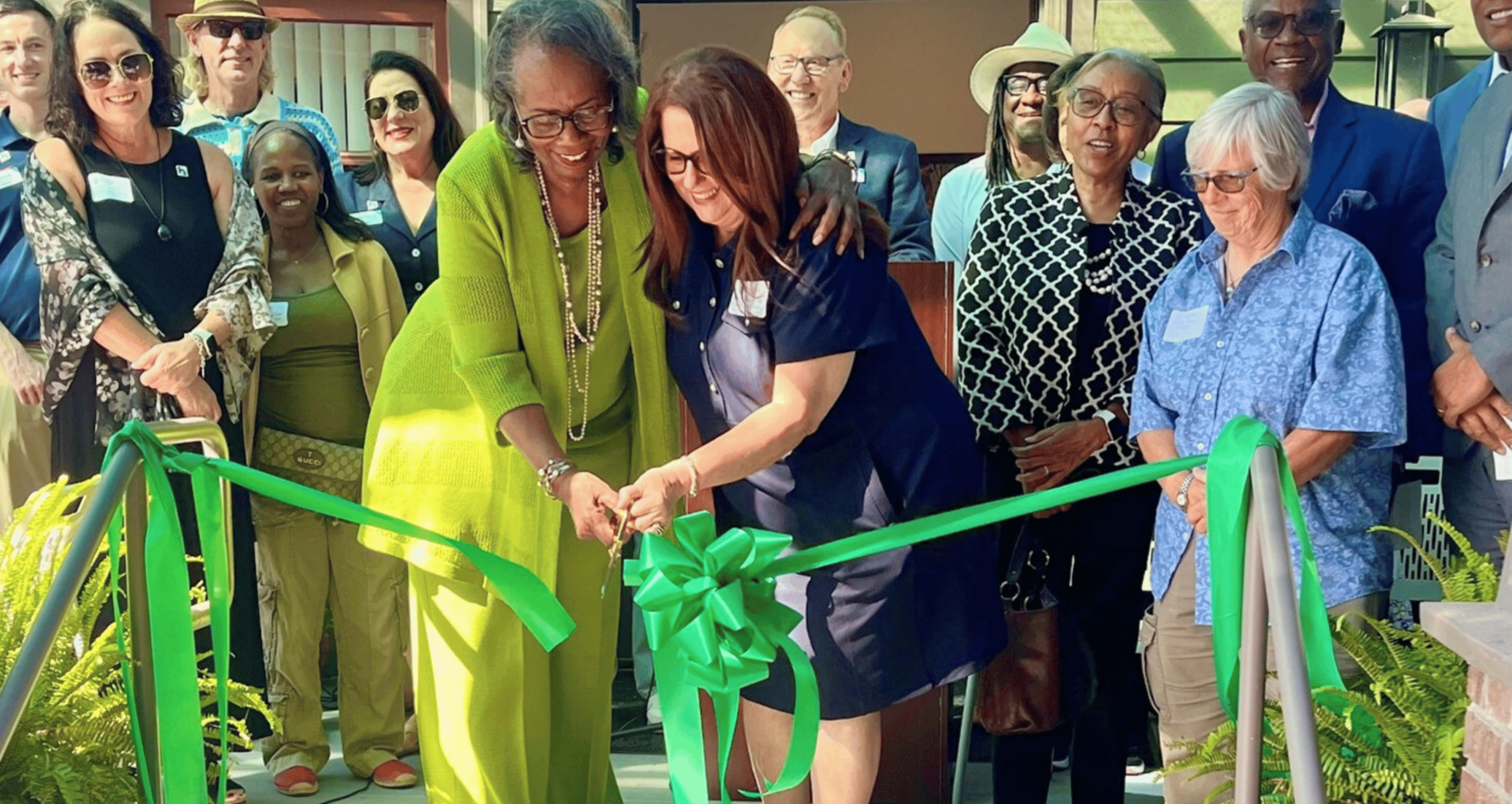
I saw this truth in action on my recent trip to California, where I joined California Lutheran Homes (CLH)—a member of the Lutheran Services in America network—for tours of affordable housing projects and the dedication of a new community space for the Biddy Mason Charitable Foundation (BMCF). Each represents a powerful example of how faith-based organizations are expanding housing services and supports to foster economic stability and community well-being.

Mission in Action: Creating Affordable Housing that Transforms Lives

California Lutheran Homes fulfills its mission daily by providing assistance for those in need of housing and services through partnerships with congregations and community-based organizations, ensuring that all people have the dignity of a safe and stable place to live. Their recent work demonstrates how affordable housing development creates more than a building, embracing people, values, and partnerships that strengthen entire communities.

During my visit, I saw a property transformation that perfectly illustrates this. What once had rotted beams and uneven floors are now high-quality homes for more than 80 low-income residents who might otherwise have faced homelessness. This restoration was made possible only through an early-stage loan from California Lutheran Homes—a great example of the type of flexible, mission-aligned financing we are working to expand through our Housing Solutions Collaborative.

As Deacon Nancy Ackerman wisely said during our visit: “We create affordable housing one unit at a time.” That commitment is at the heart of how our network brings hope and housing stability to vulnerable populations across the country.

Honoring Legacy: The Biddy Mason Charitable Foundation

The visit also included the dedication of the newly renovated Biddy Mason Charitable Foundation home—a craftsman house purchased and restored by CLH to serve foster youth in Los Angeles.

Biddy Mason’s story is one of extraordinary resilience and faith. Born into slavery, she sued for and won her family’s freedom in California, became a respected healer and midwife, and emerged as one of Los Angeles’s first Black real estate owners and philanthropists. She was also a founder of the First AME Church. Her legacy of empowerment lives on through the foundation that bears her name.

With support from CLH, BMCF now has a permanent home from which to continue the mission of providing care, mentorship, and opportunity to foster youth. It was an honor to witness this dedication and to celebrate how California Lutheran Homes helped keep her spirit alive building both homes and hope.

A Network United for Housing and Economic Stability

California Lutheran Homes is a member of the Housing Solutions Collaborative, where members share insights, strategies, and lessons learned to accelerate affordable housing development across our national network. CLH also stepped forward as a founding member of our Housing Leadership Circle, providing catalytic funding that allows LSA to advance this critical work and expand housing services and supports nationwide.

This collaboration exemplifies how the LSA network leverages faith-based partnerships to make complex housing solutions achievable, helping vulnerable communities access the stability they need to thrive.

Join Us in Building Housing and Hope

Expanding affordable housing takes partnership, innovation, and shared commitment across sectors—faith-based organizations, philanthropies, health systems, and mission-driven investors all have a role to play.

If you are an LSA member, we invite you to join our Housing Solutions Collaborative—a learning and action network where members share tools, insights, and strategies to advance affordable housing and strengthen housing services and supports for people in their communities.

If you are a philanthropic partner, purpose-driven business, or impact investor, we invite you to join our Housing Leadership Circle—a national coalition that connects leaders with opportunities to invest in affordable housing, foster economic stability, and build stronger, more resilient communities through collaboration with Lutheran social ministry organizations across the country.

Together, we can ensure that every person has access to safe, affordable housing—and the dignity, health, and opportunity that comes with it.

Join us in this mission to build housing and hope, one unit at a time. Contact me at snewton@lutheranservices.org to learn more.

Susan Newton is Senior Director of Strategic Initiatives at Lutheran Services in America.

Implementation of Budget Reconciliation Law Moves Ahead as Senate Advances Housing Bill

August 18, 2025

By Sarah Dobson

As Congress continues to shape key domestic policy priorities, two major developments are advancing that directly impact our network: the implementation of the budget reconciliation law and renewed bipartisan momentum on federal housing legislation. Each presents challenges and opportunities for engagement. Below, we provide updates on what’s unfolding, how your input is essential, and where we’re focusing our advocacy efforts in the weeks ahead.

Budget Reconciliation: Implementation Timeline and Feedback on Impacts

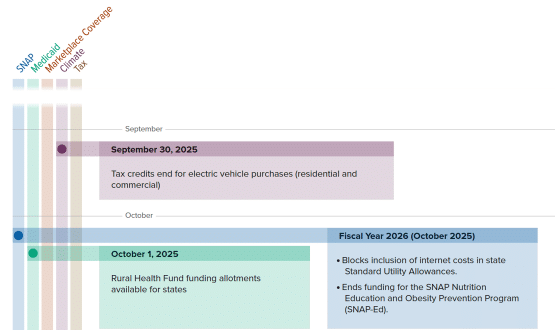
Following the enactment of the sweeping budget reconciliation law on July 4, our policy and advocacy focus has turned to the effects of its implementation, with much of the impact depending on which state is being discussed. For example, the Kaiser Family Foundation has prepared a state-by-state analysis of the impact of Medicaid spending reductions. Further, many of the law’s provisions do not take immediate effect, instead rolling out over the course of the next five years. The Center on Budget and Policy Priorities has prepared a helpful interactive timeline showing the various effective dates. Click on the snapshot below to view the full timeline.

In addition, in order to most effectively communicate the impact on our network of healthcare related changes in the law, we are asking for your feedback on a brief series of related questions.  We realize not all questions will be relevant to everyone in our network—feel free to respond to only those questions that relate to your organization. Sample questions include: “What changes included in the law do you consider to be the highest priority for your organization to address?” and “Have you completed any analysis about how the law will impact your community?”

SHARE HOW BUDGET RECONCILIATION WILL IMPACT YOU

Thank you for your ongoing engagement with us in raising our unified faith-based voice with lawmakers and administration stakeholders. We will continue tracking both implementation of the current law and further legislative efforts carefully and will update you as needed.

Bipartisan Senate Housing Bill Moves Forward

On July 29, the Senate Committee on Banking, Housing, and Urban Affairs held a unanimous vote to pass the bipartisan “Renewing Opportunity in the American Dream (ROAD) to Housing Act” (S. 2651) out of committee. This is the first bipartisan housing bill markup in over a decade, following introduction of the legislation by committee chair Tim Scott (R-SC) and ranking member Elizabeth Warren (D-MA.) The ROAD to Housing Act includes 40 provisions that cover financial literacy, housing supply, manufactured housing, homeownership, program reform, veterans’ housing, and oversight and coordination of housing program and agencies.

Related to specific housing policy priorities of our network, the bill includes:

  • the provisions of the Rural Housing Service Reform Act, bipartisan legislation that would improve federal rural housing programs, cut red tape, and strengthen the supply of affordable housing by improving and strengthening several Department of Agriculture rural housing programs
  • reauthorization and improvement of the Home Investment Partnerships Program (HOME); creation of a competitive pot of highly flexible funding for communities that can be used to support affordable or mixed-income housing
  • a requirement for interagency coordination between the Department of Housing and Urban Development, USDA, and the Department of Veterans Affairs for the purposes of sharing data, streamlining processes, and increasing collaboration

Senators from both parties acknowledged the potential impact of recent substantial cuts at HUD on the future success of the bill but affirmed their support for moving forward. We anticipate that the House will hold a committee markup on the legislation this fall, and we will be tracking its progress and updating accordingly as we advocate for inclusion of additional needed provisions.

For more information, please contact Sarah Dobson, senior director of public policy and advocacy.

Housing Update: HUD and LIHTC

March 12, 2025

HUD Staffing

Our partners at the National Low Income Housing Coalition are circulating a sign-on letter to address the planned staff changes at the U.S. Department of Housing and Urban Development (HUD). The Trump Administration is expected to terminate at least half of all HUD employees, making it significantly more difficult for states and communities to access the federal housing, community development, and homelessness investments they need to address their most pressing challenges. Learn more.

ICYMI: The National Homelessness Law Center recently hosted a web forum on Trump, Homelessness and the Road Ahead. Access the recording and transcript.

LIHTC

The Affordable Housing Credit Improvement Act (AHCIA) is bipartisan legislation introduced in the House and Senate to expand and strengthen the Low-Income Housing Tax Credit (LIHTC) to encourage private investment in the development and preservation of affordable housing. The Action Campaign is seeking help to build broader support and co-sponsorship for this bill. You can learn more here.

Sue Polis is Vice President of Public Relations and Government Affairs at Lutheran Services in America.

Leadership of Key Congressional Committees Finalized

February 10, 2025

With Republicans in the majority in both chambers of Congress, leadership changes on key committees that affect healthcare, workforce, and housing policy are now finalized. Lutheran Services in America will engage these leaders in partnership with members to strengthen relationships and advance advocacy priorities.

HOUSING: Across our network, we are committed to addressing housing insecurity as an economic and health crisis. Our work in Congress on this issue will focus on the Senate Banking, Housing and Urban Affairs Committee, now chaired by Sen. Tim Scott (R-SC) with Sen. Elizabeth Warren (D-MA) serving as the lead Democrat, and the House Financial Services Committee, led by Rep. French Hill (R-AR) and Rep. Maxine Waters (D-CA).

HEALTH & WORKFORCE: Turning to healthcare and workforce issues, multiple committees have jurisdiction over various areas of the law. The Senate Health, Education, Labor and Pensions (HELP) Committee will now be led by Sen. Bill Cassidy (R-LA), with Sen. Bernie Sanders (I-VT) serving as the lead minority member.  At the Senate Finance Committee, which oversees health programs under the Social Security Act, including Medicare, Medicaid, and the Children’s Health Insurance Program (CHIP), Sen. Mike Crapo (R-ID) has become chair, and Sen. Ron Wyden will lead Democrats on the panel.

In the House, the Energy and Commerce (E&C) Committee has broad jurisdiction over healthcare and the regulations and laws that govern the sector, while the Ways and Means Committee has jurisdiction over revenue-related aspects of the Social Security system, Medicare, and social services programs, including foster care and adoption programs—and like Senate Finance, also has a key role in shaping tax policy, including an expected 2025 tax bill. Finally, the House Education and Workforce Committee has jurisdiction over education, workforce development, and workforce policy.

Here is where things stand with key House committees:

  • House Energy & Commerce: Brett Guthrie (R-KY) was elected as chair while Rep. Frank Pallone (D-NJ) will serve as ranking minority member for Democrats.
  • House Ways & Means: Rep. Jason Smith (R-MO) will hold the top spot at Ways & Means (W&M). Rep. Richard Neal (D-MA) will remain in his role as the committee’s top Democrat.
  • House Education and Workforce Committee: Rep. Tim Walberg (R-MI) will be the new Republican chair, with Rep. Bobby Scott (D-VA) leading the Democrats.

Contact Sarah Dobson for more information.

Sarah Dobson is Senior Director of Advocacy and Public Policy at Lutheran Services in America.

Supporting
Our Neighbors,

TOGETHER.

Our shared Lutheran tradition of service to our neighbor is more vital than ever.

Join us as we work to ensure our network continues delivering essential services to all in need.