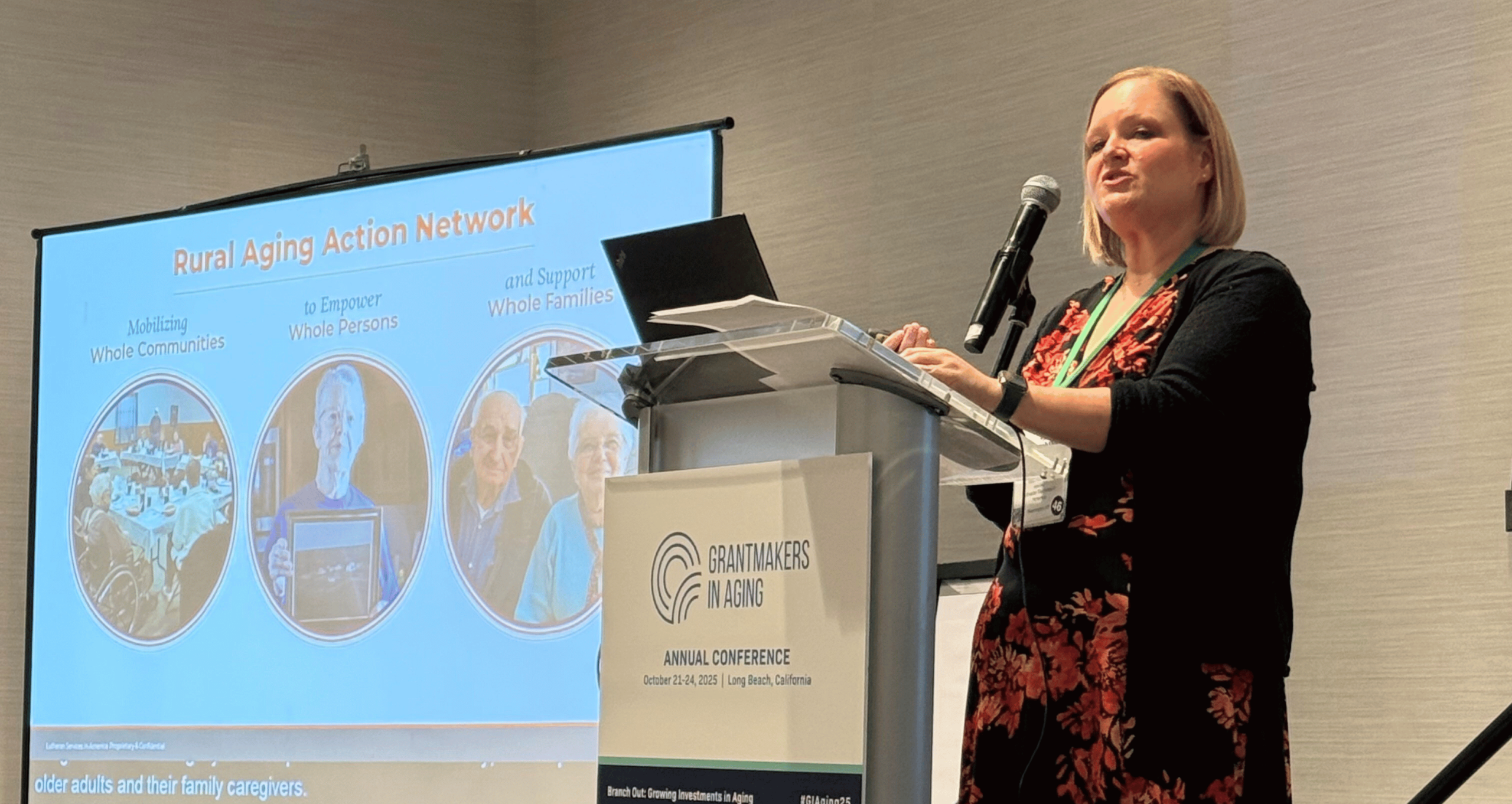
Lutheran Services in America recently joined national leaders in aging and rural health for “Building Age-Friendly Rural Systems: Strategies and Implementation Resources for Leaders, Policymakers, and Advocates,” a virtual briefing focused on strengthening the systems that support older adults and family caregivers in rural communities.
Hosted in partnership with the Betty Irene Moore School of Nursing at UC Davis, National Rural Health Association, The John A. Hartford Foundation, The SCAN Foundation and Lutheran Services in America, the webinar brought together policymakers, health system leaders, aging and disability organizations, rural health professionals, researchers, advocates, and philanthropic partners.
The conversation came at an important moment. As states invest in rural health and implement the Centers for Medicare & Medicaid Services’ Rural Health Transformation Program, speakers explored how leaders can ensure these investments respond to the realities of rural communities and lead to stronger, more coordinated systems of care.
Lutheran Services in America shared insights from our Rural Aging Action Network work with rural older adults and family caregivers, including findings from Rural Voices Shaping Transformation and Rooted in Care: Transforming the Future for Rural Family Caregivers. Grounded in the lived experiences of rural older adults and caregivers, these efforts identify opportunities to strengthen Medicaid and home- and community-based services, improve benefits navigation, address workforce challenges, and expand supports for family caregivers.
Partners also highlighted the National Rural Age-Friendly Initiative, led by the National Rural Health Association and The John A. Hartford Foundation, which offers practical tools to help rural health systems assess and strengthen age-friendly practices. The Betty Irene Moore School of Nursing at UC Davis and The SCAN Foundation shared findings from the Rural Aging in California Policy Brief Series, offering community-informed recommendations related to long-term services and supports, health care access, housing stability, and cross-sector collaboration.
Across the various efforts discussed, a common message emerged: strengthening rural systems requires listening to communities, working across sectors, and translating local knowledge into policy and practice. Transportation, workforce, caregiving, housing, digital access, health care, and home- and community-based services are deeply interconnected, and sustainable solutions require collaboration that reflects that reality.
For Lutheran Services in America, participating in conversations like this advances our strategic commitment to grow our capacity to lead and effect change, catalyze innovation through collaboration, and amplify our united faith-based voice. By bringing lessons from our network and the Rural Aging Action Network into national conversations, and pairing those insights with the expertise of partners across aging, health care, research, and philanthropy, we can help ensure the experiences of rural communities inform the policies and investments shaping their future.
Ultimately, building age-friendly rural systems is about more than identifying what rural communities need. It is about ensuring that policymakers, health system leaders, and other decision-makers have the evidence, tools, partnerships, and community-informed insights they need to act.
Regan McManus is Senior Director of Aging Initiatives at Lutheran Services in America.