
CMS Issues Initial Guidance on Medicaid Work Requirements

December 11, 2025

On December 8, the Centers for Medicare and Medicaid Services (CMS) issued initial, new guidance to states to inform implementation of the new Medicaid community engagement provisions (aka: work reporting requirements) included in H.R. 1.  The new law includes multiple sweeping changes to the Medicaid program, with more guidance expected to follow.  In issuing this initial guidance, CMS officials outlined four principles guiding policy development:  

  1. connect members to work and community;
  2. offer states flexibility;
  3. promote alignment with existing requirements for other programs such as SNAP and TANF; and
  4. protect taxpayers. 

CMS reiterates the statutory deadline of January 1, 2027, for states to implement the new community engagement requirements, while outlining a process for the Secretary to grant temporary compliance exemptions ending on December 31, 2028 or before to states experiencing hardships but demonstrating good faith efforts to comply.  The agency will also issue grants to help states establish new or updated systems to comply with the new requirements.   

What’s New?

While the guidance focuses primarily on restating in plain language the requirements from H.R. 1 across key areas of focus, as enumerated below, there are a few new pieces of operational direction as noted.  For example, CMS has offered new interpretations related to compliance verification, potential sources of “reliable information” for those verifications, and the role of managed care organizations (MCOs).  Deeper analysis is also available from our partners in the Modern Medicaid Alliance.   

Applicable individuals: 

  • Only individuals who are 1) aged 19-64, not pregnant, not eligible for or enrolled in Medicare, and not eligible for Medicaid via other mandatory group; or 2) eligible to enroll in Medicaid under a waiver and who meet the first set of criteria.  
  • NEW in this guidance: CMS clarifies that the requirements will NOT apply to states that 1) have not expanded Medicaid AND 2) do not have a 1115 waiver offering minimum essential coverage (MEC); and 
  • Looking ahead: CMS notes that it will continue to evaluate which existing state section 1115 demonstration populations meet the definition of an “applicable individual.” 

Activities which meet the community engagement requirements (per month): 

  • 80 hours of work 
  • 80 hours of community service 
  • 80 hours of work program participation 
  • 40 hours of enrollment in an educational program 
  • A combination of 80 hours in any of the above 
  • A monthly income not less than $580 
  • Seasonal work with average monthly income over the preceding 6 months of not less than $580 

Exclusions to the requirements: 

  • Former foster youth up to age 26 
  • A person who is an Indian (including Urban Indian, California Indians, or individuals otherwise determined eligible as Indians for the Indian Health Service) 
  • A parent, guardian, or caretaker relative of a disabled individual or dependent child under the age of 13 
  • A veteran with a total disability rating 
  • A person who is medically frail or otherwise has special medical needs 
  • A person who is complying with any requirements under the SNAP program or who is a member of a household that receives SNAP and is not exempt from work requirements 
  • Participants in drug addiction or alcoholism treatment and rehabilitation programs 
  • Inmates of public institutions 
  • Individuals who are pregnant or entitled to postpartum medical assistance 
  • NOTABLE in this guidance: CMS opted NOT to include the definition of “medical frailty” as described in the legislation in this initial guidance.  

Exceptions to the requirements for individuals experiencing short-term hardships including: 

  • Receiving various types of inpatient services 
  • Residing in a county in a state of emergency or disaster or in a state with a high level of unemployment 
  • Having to travel for an extended period to receive medical services unavailable at home 

Demonstrating and verifying compliance:  

  • New applicants must demonstrate compliance for one or more (not more than three) consecutive months immediately preceding the month of application 
  • Current enrollees must demonstrate compliance for at least one or more months during the period between the previous eligibility determination and the next redetermination 
  • NEW in this guidance: 
    • Beneficiaries are considered compliant if they demonstrate compliance during any part of the eligibility period, and states may not require compliance in specific or consecutive months. 
    • States must conduct redeterminations every six months for expansion populations. 

Use of reliable information:  

  • States are required to establish a process and first attempt to use reliable information available to them without requiring an individual to submit additional information to verify compliance 
  • NEW in this guidance 
    • CMS expands on potential sources of such reliable data 
    • The agency adds that states may not request additional information or documentation from individuals unless they are unable to establish compliance using reliable data.  

Non-compliance procedures when states cannot verify compliance: 

  • States must issue a notice of noncompliance and provide 30 calendar days to demonstrate compliance or qualification for exemption or exception. 
  • For current enrollees, states must continue to provide coverage during this 30-day period. 
  • In all cases, if compliance is not demonstrated, the state must deny coverage or disenroll the individual at the end of the month following the month in which the 30-day period ends. 

Outreach: 

  • States must notify beneficiaries about the requirements before they are implemented and periodically thereafter. 
  • States have a set period to begin outreach, and the outreach must be sent by mail and at least one additional method. 

Role of Managed Care Plans (MCOs):  

  • NEW in this guidance: states cannot permit MCOs to decide whether beneficiaries are compliant, but MCOs may perform supportive tasks.

What’s the Takeaway? 

CMS is expected to issue additional guidance, particularly with more detailed instructions for state operationalization.  H.R. 1 requires CMS to issue an interim final rule by June 1, 2026, though it is not yet clear whether outstanding questions will be addressed through that final rulemaking or through further subregulatory guidance beforehand. We will share more information as it becomes available.

Sarah Dobson is Senior Director of Advocacy and Public Policy at Lutheran Services in America.

Announcing Our New Standing Public Policy and Advocacy Committee

October 21, 2025

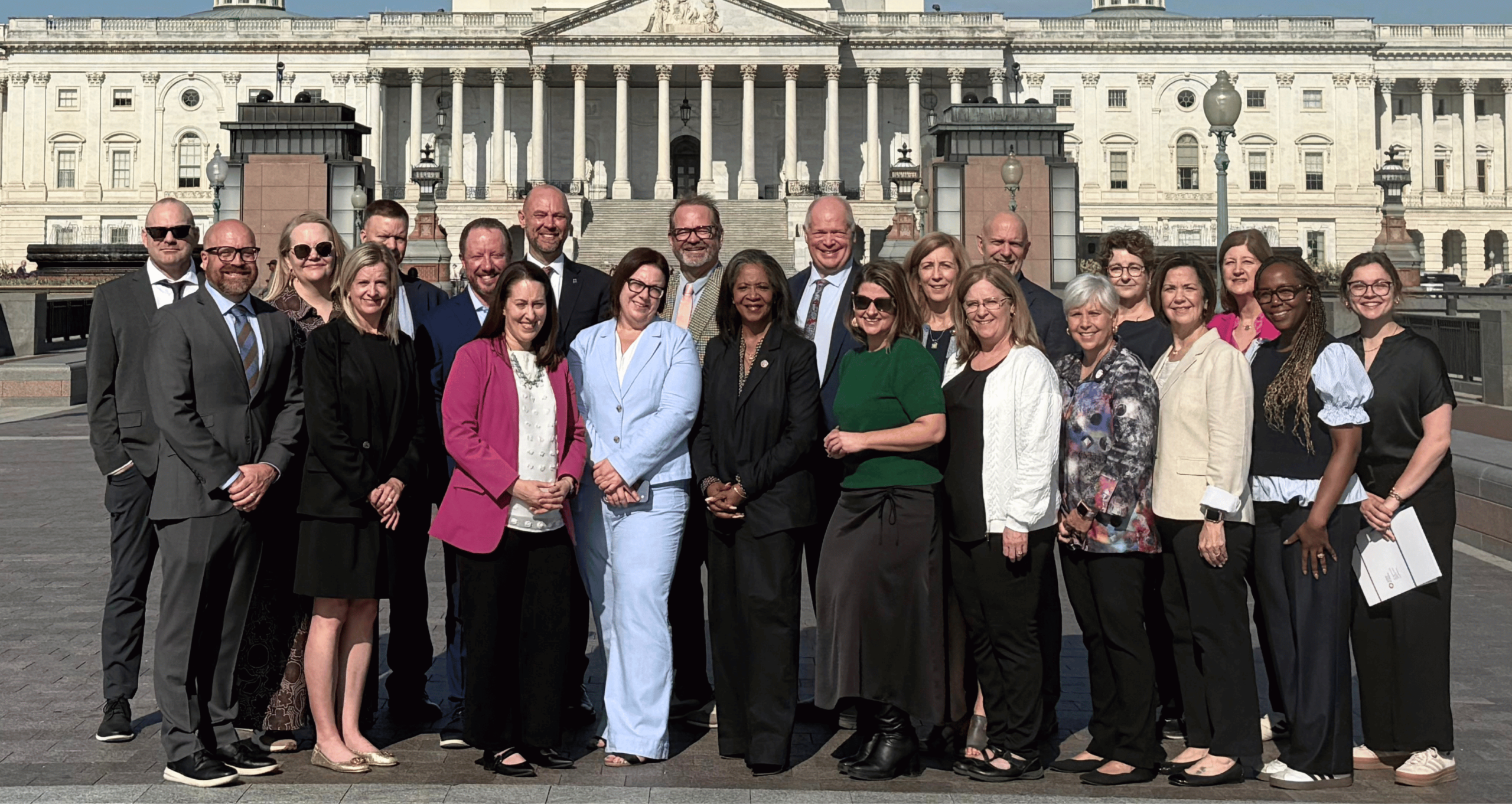
We’re pleased to announce the formal launch of our Public Policy and Advocacy Committee, transitioning from a successful one-year pilot into a permanent body that will guide and elevate our network’s federal policy agenda.

This marks a key step in advancing our shared mission. Building on the “Here We Stand” campaign, the committee will amplify our national advocacy efforts and reflect the diversity and expertise of our network, bringing together 20 leaders from across our network working in health, housing, aging, child and family services and disability.

The committee will focus on priority issues like Medicaid, affordable housing, and workforce development, while also exploring how data, AI, and emerging technologies can strengthen service delivery. It will help shape our federal policy positions and support coordinated advocacy across member organizations.

We’ll also leverage members’ connections to anchor strategic meetings with lawmakers, especially those in leadership or on key committees, alongside network members from the same states or districts. These engagements will support both federal and state-level advocacy.

At a time when public trust in institutions is waning, our “Here We Stand” polling offers both encouragement and direction: a majority of Americans trust faith-based providers to deliver high-quality care. This committee will help us lean into that trust by lifting up our collective voice, demonstrating impact, and deepening our commitment to the people and communities we serve.

The committee consists of:

  • Michelle Angalet, Chief Operating Officer, Inspiritus
  • Salah Ansary, Regional Director, Lutheran Community Services Northwest
  • LaSharnda Beckwith, President & CEO, Lutheran Social Services of Southern California
  • Murray Chanow, Sr. VP of Brand & Public Affairs, Upbring
  • Stephanie Chedid, President & CEO, Luther Manor
  • Héctor Colón, President & CEO, Lutheran Social Services of Wisconsin and Upper Michigan
  • Anne Dennis-Choi, President & CEO, AK Child & Family
  • Maria Foschia, CEO, Lutheran Metropolitan Ministry
  • Shelly Griffith, CEO, Eben Ezer Lutheran Care Center
  • Chris Koenig, President & CEO, Niagara Lutheran Health System, Inc.
  • Adam Marles, President & CEO, Lutheran Senior Services
  • Amy Moore, VP of External Relations , Ascentria
  • Tara Muir, Advocacy & Government Relations Coordinator , Immanuel
  • Margaret Nimmo, Chief Strategy Officer, enCircle
  • Joan Plump, Chief of Staff, Gemma Services
  • Mark Stutrud, President & CEO, Lutheran Social Services of Illinois
  • Erin Sutton, Senior Director of Advocacy, Lutheran Social Service of Minnesota
  • Tom Syverson, Director of Government and External Affairs, Good Samaritan
  • Linda Timmons, President & CEO, Mosaic

We’re excited to grow this committee into a cornerstone of our advocacy efforts, ensuring our values are reflected in the lives we touch and the communities we serve.

Sarah Dobson is Senior Director of Advocacy and Public Policy at Lutheran Services in America.

Lawmakers Face Government Shutdown as CMS Launches Workforce and Rural Health Initiatives

September 25, 2025

As of today, with just days left before fiscal year 2025 funding expires, Congress is racing to avoid a government shutdown. Late last week, the House passed a continuing resolution, mostly along party lines, to fund the government through November 21. However, the Senate has not yet acted on it and seems unlikely to do so, making a government shutdown more likely when current funding expires on October 1.

While Republicans indicate general support for a short-term funding patch without any additional provisions to allow more time for broader negotiations, this is at odds as Democrats advocate that any temporary funding bill must include a permanent extension of expiring health insurance premium tax credits. The President canceled a planned meeting (that was set to take place today, Sept. 25) with Democratic leaders and signaled he would use a shutdown to shrink federal agencies by designating fewer workers as “essential.” His administration also directed agencies to consider firing employees working on unfunded programs that don’t align with his priorities to support additional downsizing once funding resumes.

Meanwhile, lawmakers have yet to reach consensus on a second budget reconciliation package, which could bring damaging cuts to Medicaid and other critical human services. Lutheran Services in America urges advocates to contact their lawmakers now to protect these essential programs.

Amid these debates, the Centers for Medicare & Medicaid Services has announced two major initiatives. First, a $75 million investment in workforce training for skilled nursing facilities, aimed at addressing shortages of nurses and certified nursing assistants. The program will support tuition reimbursement, stipends, and training programs in collaboration with states. Second, CMS has launched the $50 billion Rural Health Transformation Fund, giving states the opportunity to address pressing rural health challenges over the next five years.

Congress is also taking steps to address workforce shortages through new legislation. The bipartisan Healthcare Workforce Resilience Act and the Dignity Act of 2025 seek to expand the pool of authorized healthcare workers through immigration reforms. In addition, new research highlights the role of telehealth and artificial intelligence in expanding healthcare capacity—though neither alone can solve the workforce crisis.

Stay engaged with these fast-moving developments: Join our next Capitol Conversations webinar on Thursday, October 16 at 1 p.m. ET.

Sarah Dobson is Senior Director of Advocacy and Public Policy at Lutheran Services in America.

Policy Shifts at CMS & HHS and What it Means for Social Service Providers 

September 24, 2025

The U.S. Department of Health and Human Services (HHS) and agencies under it, including the Centers for Medicare and Medicaid Services (CMS), have recently offered insights into policy priorities that further signal significant policy shifts. Below is a synopsis of key changes, including potential opportunities and challenges for social service providers.

In May, CMS, through their Innovation Center (CMMI), recently released their new strategic direction, which focuses on evidence-based prevention, data access, and choice and competition. Given CMS’s recent withdrawal of federal Medicaid guidance that impacts the ability of states to use waivers and other funds to address health-related social needs, CMMI’s new strategic direction points to the following areas of interest: 

  • Evidence-Based Prevention: Includes great focus and emphasis on meeting nutrition needs, including food access, healthy food access and food as medicine; accountable care and accountable care organizations (ACOs) that assume global risk/downside risk; caregiver support; chronic disease management and disease prevention
  •  Data Access: Priorities include global risk/total cost of care models and waivers for predictable cost sharing for certain services.  
  •  Drive Choice and Competition: With a focus on rural providers, ACOs, community health centers; site neutral payments across settings; changing certificate of need requirements; and prioritizing high value care and services and incentivize unnecessary utilization

HHS also recently released their Make America Healthy Again key strategies report with a broad prevention-based agenda across several areas, including some more specifics important for social service providers including: executive actions, process reform and deregulation, public awareness and education, and private sector collaboration. Some more specific areas that Lutheran Services in America will continue to monitor include:

  • USDA Nutrition Programs: USDA will use its authorities to prioritize utilization and promotion of whole, healthy foods across its 16 nutrition programs.
  • Supplemental Nutrition Assistance Program (SNAP): USDA will provide states with technical assistance in SNAP waiver development and implementation to restrict the purchase of junk food and reorient the program towards better nutrition. 
  • MAHA Boxes: USDA will develop options to get whole, healthy food to SNAP participants. 
  • Head Start Nutrition: ACF and USDA will implement the new Dietary Guidelines for Americans (DGAs) through supporting access to USDA’s Child and Adult Care Food Program (CACFP) and the National School Breakfast and Lunch programs in Head Start providers, and will provide supplemental funding opportunities to support the provision of whole, healthy foods in Head Start programs. 
  • Medicaid Quality: CMS will collaborate with states to establish quality metrics for Medicaid managed care organizations that promote measurable health improvements through nutrition coaching and other fitness indicators (e.g., predicted VO₂ Max). 
  • Quality Measurement: HHS and CMS will develop quality measures that promote children’s health outcomes rather than just healthcare utilization. 
  • Pediatric Mental Health: HHS will ensure the Pediatric Mental Health Care Access Program at Health Resources and Services Administration (HRSA) is effective at providing access to pediatric mental health professionals, especially as youth anxiety and depression are increasing and are linked to factors such as screen time, vaping, poor nutrition and lack of physical fitness.  

For more information, please contact Sue Polis.

Sue Polis is Vice President of Public Relations and Government Affairs at Lutheran Services in America.

What the Budget Bill Means for Medicaid and our Network

July 17, 2025

On July 4, President Trump signed into law a sweeping budget reconciliation package that was passed in the Senate on July 1 and House on July 3 on party-line votes of 51–50 and 218–214, respectively. The law contains a number of provisions that will impact our network in several areas.

  • Healthcare:
    • Medicaid: The law imposes more stringent work reporting requirements for “able-bodied” adults between 19 and 64; lowers the allowable rate for state provider taxes for some provider types, with specific carve-outs for nursing homes and intermediate care facilities; grants states new authority to offer HCBS through standalone waivers that don’t require individuals to meet institutional-level of need.
    • SNF minimum staffing: Prohibits implementation of the SNF minimum staffing regulation for 10 years.
    • Rural hospitals: Includes a $50 billion rural hospital stabilization fund designed to support states with approved rural health transformation plans, allocating $10 billion annually from 2026 to 2030.
    • Medicare: The CBO projects that the law will trigger future cuts to Medicare totaling nearly $500 billion due to the Statutory Pay‑As‑You‑Go Act of 2010 (S-PAYGO). This law kicks in when legislation increases the deficit and would trigger an estimated $45 billion in Medicare cuts for fiscal year 2026.
  • Housing: Creates a permanent 12% allocation increase in low-income housing tax credits (LIHTC) starting in 2026, while also permanently reducing the 50% bond financing threshold test to 25% beginning in 2026, lowering a barrier to affordable housing production.
  • Refugees: It institutes a permanent ban on refugees and other humanitarian-status immigrants from getting Medicaid.
  • Nonprofit tax provisions:
    • Charitable deduction: It establishes a non-itemizer deduction for charitable contributions at $1000 for individuals and $2000 for joint filers;
    • Excludes two provisions we opposed: one putting nonprofit status in jeopardy if an organization was deemed to have ties to a “terrorist” group and a second levying UBIT on transportation and fringe-benefit related costs.

The focus now turns to implementation of the law, with much of the impact depending on which state is being discussed. For example, the Kaiser Family Foundation has prepared a state-by-state analysis of the impact of Medicaid spending reductions.

Looking ahead, we anticipate another budget reconciliation bill in the fall. In a recent interview, House Budget Committee Chair Jodey Arrington (R-TX) said that majority Republicans seek deeper cuts to Medicaid and spending reductions in Medicare that weren’t included in the first bill. They also plan to cut funding for states that fail to enforce existing laws against Medicaid benefits for undocumented immigrants and reimbursement rates for “healthy, able-bodied adults” added to Medicaid under President Barack Obama’s Affordable Care Act.

We will be tracking both implementation of the current law and further legislative efforts carefully and will update you as needed.

Sarah Dobson is Senior Director of Advocacy and Public Policy at Lutheran Services in America.

Here We Stand: Advocating for People, for Care, for Medicaid

July 17, 2025

Our members continue to be at the forefront of advocacy in defending Medicaid, grounded in our unified, faith-based message: Here We Stand. For People. For Care. For Medicaid.

Across our network, members have demonstrated commitment through advocacy, outreach, and a willingness to share their stories.

  • Our members came to Washington to join in three Capitol Hill fly-ins to make their voices heard, resulting in over 80 meetings (cumulatively) with key members of Congress.
  • Our calls to action engaged more than 700 individuals, including 128 from the Lutheran Services in America network, expanding our reach to new partners and advocates.
  • In partnership with 4media Group, 34 advocates were trained in media engagement and eight earned media pieces, such as op-eds and letters to the editor, were written, collectively reaching an audience of more than 3 million.
  • Our Here We Stand video and paid ad campaign ran in more than a dozen reputable websites, including USA Today, Forbes and broadcast television news sites. The campaign yielded more than 381,000 impressions, exceeding our goal of 250,000, and garnered nearly 233,000 completed views—an above-industry benchmark video completion rate of 70 percent.
  • Coverage included TV, statewide radio and earned media, including KenCrest, Genacross Lutheran Services, and enCircle.

The breadth of our engagement reflects the power of faith-rooted advocacy and the impact of our collective voice in protecting care for millions.

Sarah Dobson is Senior Director of Advocacy and Public Policy at Lutheran Services in America.

The Latest on Medicaid

May 27, 2025

The U.S. House of Representatives Passes Budget Reconciliation Bill with implications for Medicaid, Non Profit Charitable tax-exempt organizations and Medicare. Action now moves to the Senate.

The House of Representatives voted on May 22 to pass their version of a budget reconciliation package with a vote of 215-214 that includes $715 billion in cuts to Medicaid, while adding over $2-3 trillion to the deficit (based on various estimates).  The measure includes work requirements targeted at the adult expansion population beginning in December 2026. It also includes caps to provider taxes – which is the way a significant majority of states pay for their share of Medicaid – making it hard for states to fill the gaps in funding  The non-partisan Congressional Budget Office projects that roughly 10 million Americans will lose coverage as a result of the cuts.

Action now moves to the Senate where Majority Leader John Thune (R-SD) has signaled they will look for $600 billion in cuts to Medicaid to pay for the expiring Tax Cuts and Jobs Act. The Senate is expected to pass a budget reconciliation package before the July 4 recess, which means that it will be important to meet with your Senators to ask them to protect Medicaid from cuts.

Our new campaign, Here We Stand. For People. For Care. For Medicaid. Includes resources to support outreach to members of Congress and the media in your local and state markets.

House Budget: Charitable Non-Profit Tax and Medicare Implications

The recently passed House version of the Budget Reconciliation Bill includes implications for nonprofit charitable organizations and Medicare.

Nonprofit Charitable Tax Status: What is NOT included/out

  • The House passed bill does NOT include the provision that would revoke nonprofit status from “terrorist supporting organizations”:
    • House Republicans removed a provision from the bill that would have granted authority to the Treasury Secretary to revoke nonprofit status from “terrorist supporting organizations,” without requiring the Secretary to share full evidence or ensure due process.

What IS included/in: 

  • Charitable Act at $150/300 (single/joint filer) – urge Senators to support;
    • The House bill creates a non-itemizer tax deduction up to $150 for individuals and $300 for married couples, regardless of whether the tax filers claim an itemized deduction (Section 110112).
  • Limits on charitable donations – urge Senators to oppose;
    • These proposals (Section 110011 and Section 112027) discourage charitable donations made by corporations and individuals, ultimately leaving nonprofit organizations with fewer resources to serve their community.
    • Adds new limits on itemized deductions, including the charitable deduction. If enacted, this provision would significantly reduce the value of itemized deductions for high-income taxpayers, disincentivizing charitable giving.
    • Section 112027 creates a 1% floor for charitable contributions made by corporations. In doing so, this provision would discourage corporate giving, if such donations amount to less than 1% of their taxable income.
  • New or expanded taxes on non-profits and foundations – urge Senators to oppose;
  • These proposals (Section 112022 and Section 112024) divert scarce resources away from essential services, undermine the ability of charitable nonprofit organizations to meet needs in their communities, and put greater strain on government.
  • Increases and expands Unrelated Business Income Tax (UBIT) to include any qualified transportation fringe benefit, such as transit benefits or parking benefits, for charitable organizations.  Note: The provision also carves out an exception for church-affiliated organizations.
    • In essence, this provision applies an income tax on an expense. This provision was previously passed in 2017 and subsequently repealed due to the confusing nature of applying an income tax on an expense and difficulty of quantifying the expense of certain benefits such as the cost of a parking spot already owned by a charitable organization.

Medicare:

  • Triggers Medicare cuts under the Statutory Pay As You Go Act of 2010 that could include reductions in provider reimbursements. Because the bill would increase the budget deficit by $2.3 trillion, the CBO projects the White House Office of Management and Budget (OMB) would have to curtail Medicare spending by $45 billion in 2026 and $490 billion from 2027 to 2034.
  • Suspends a rule to facilitate enrollment in Medicare Savings Programs that cater to low-income people eligible for Medicare and Medicaid by pushing back the effective date to 2035. Savings are estimated to be $84 billion.
  • Ends Medicare eligibility for some lawfully present foreign nationals who currently qualify by limiting the program to permanent residents who are green card holders, from Micronesia, the Marshall Islands or Palau, or, in certain cases, from Cuba. This would save $132 million.

LSA will continue to provide updates and actions as the debate moves forward in the US Senate on Medicaid and broader issues.  Stay current on our public policy efforts by subscribing to our advocacy alerts.

Please contact LSA staff with any questions or for more information:

Voice. Evidence. Action.

May 23, 2025

Our strength as a trusted, community-centered national network comes not just from our size and scale, but from the intersections of our work where message, evidence, and action meet. Last week was a vivid example of that alignment as we launched the Here We Stand campaign, published a new issue brief, “Innovating Care Through Community Partnerships,” and hosted a Results Network convening with 50 leaders from across the country.

Together, these initiatives tell a story of collaboration, innovation, and a united, faith-based voice leading with purpose.

Medicaid is a cornerstone of our work and a lifeline for the people we serve in more than 1,400 communities nationwide. As policymakers at both the state and federal levels continue to debate the program’s future, Here We Stand gives voice to our shared values. It boldly affirms our unwavering commitment to the millions who rely on Medicaid and reflects our unique perspective as a network that works across the full spectrum of Medicaid stakeholders. This is more than messaging—it’s a public declaration of who we are and what we stand for.

That voice is rooted in real, on-the-ground innovation. Our new issue brief highlights how Lutheran Services in America members are transforming care by forging partnerships between Medicaid Managed Care and community-based organizations, showing how integration of behavioral health and non-medical services and supports are improving outcomes for children and families and strengthening communities. A future brief and forthcoming blueprint will spotlight similar innovation across the network including in aging services and the Disability Network.

These ideas don’t just live on paper. They come to life through our learning communities. From the Rural Aging Action Networks to the Disability Network and, just last week, the Results Network convening.

These aren’t parallel tracks—they are deeply connected. The message shapes the narrative. The evidence builds credibility. The convenings fuel collaboration, innovation, and momentum.

Together, they show what’s possible when we speak with one voice, ground our work in truth, and lead with courage and community. This is how change happens. This is how we light the way—united, unwavering, and filled with purpose.

Alesia Frerichs is the President & CEO of Lutheran Services in America.

What’s Next on Medicaid Fight

March 12, 2025

With the budget reconciliation process currently moving forward in Congress, the risk of cuts to Medicaid looms large. Lawmakers are looking for significant funding reductions to offset the majority’s plans for permanently extending tax cuts for the wealthiest Americans, with proposals that could drastically impact healthcare access for millions of people. The result would be reduced eligibility and enrollment in Medicaid for families, rural communities, older adults, and people with disabilities.

A Recap of What’s Happening

Key House and Senate committees are tasked with identifying substantial funding cuts based on differing House and Senate budget resolutions. The House budget reconciliation effort calls for one large budget package aimed at $4.5 trillion in cuts at the request of President Trump, while the Senate has opted for a two-phase approach to budget reconciliation. To move forward, the House bill essentially has to be adopted by the Senate. House Republicans are pushing the Senate to adopt their plan and Senate Republicans are working to find a path to the needed 51 votes. As this moves forward, significant cuts to Medicaid stay on the table.

Specifically, the House Energy and Commerce Committee, which oversees Medicaid, is looking for $880 billion in cuts to health-related programs. (See the recent nonpartisan CBO analysis of the House bill that identifies Medicaid as the path to cuts.)

Cuts to Medicaid can take many forms, including work reporting requirements, per capita caps, and restrictions on provider taxes that states use to fund their share of Medicaid.

What’s Next?

With all this in mind, it is important to meet with your members of Congress to ensure “No Cuts or Caps to Medicaid.” Here is what you can do:

  • Reach out to your members of Congress to educate them on the real-life impacts of Medicaid cuts by requesting a meeting or inviting your member(s) for a site visit to see the work of your organizations.
  • Since states share Medicaid funding responsibilities with the federal government, communicating with your governor’s office is also important. Congress is considering eliminating the use of provider taxes, which in most cases covers the state portion of the program – resulting in devastating cuts to Medicaid.
  • Use our Medicaid fact sheet to help guide your discussions and highlight the importance of the program.

Also, don’t miss our next Capitol Conversations webinar, Medicaid: What’s at Stake, on March 20 at 1 p.m. ET. We’ll hear from House Energy and Commerce Committee staff, including Leo Cuello from the McCourt School of Public Policy’s Center for Children and Families at Georgetown University, along with other important voices with insights and updates.

Sue Polis is Vice President of Public Relations and Government Affairs at Lutheran Services in America.

Threats to Medicaid in 2025: Take Action with Us

February 10, 2025

Based on recent statements and policy agendas from Congressional majority leaders who now control both the House and the Senate with the start of the new Congress, it is clear that they are seeking deep cuts to Medicaid and other domestic programs. Lutheran Services in America has two opportunities for you to join us to protect Medicaid.

  • Join us on February 13 at 1 p.m. ET for the next session of our Capitol Conversations series, “What’s at Stake: Medicaid at Risk in the Expiring Tax Cuts and Jobs Act.
    • This webinar will provide a unique opportunity to hear directly from key policymakers, leading experts, and Lutheran Services in America staff as we explore the latest legislative developments under the new Congress, the risks they pose to Medicaid, and what’s at stake for our network and the communities we support.
  • Take Action: We invite you to use our advocacy tool to  urge your lawmakers to protect Medicaid and oppose any legislation that seeks to cap, cut, or block grant Medicaid. We encourage you to personalize the message, including stories of how important Medicaid is to the work that you and your organization do, and to share this message with your colleagues and partners.

This is a critical moment for action. Join us in using our united faith-based voice to strengthen our collective advocacy and ensure our mission remains at the heart of this national conversation.

Sarah Dobson is Senior Director of Advocacy and Public Policy at Lutheran Services in America.

Supporting
Our Neighbors,

TOGETHER.

Our shared Lutheran tradition of service to our neighbor is more vital than ever.

Join us as we work to ensure our network continues delivering essential services to all in need.