

Turning Policy into Practice: What We’re Learning from our Local Demonstration Sites

December 22, 2025

Across Lutheran Services in America, we often talk about the need to bridge policy and practice. The Results Innovation Lab (RIL), in partnership with the Strengthening Families Initiative (SFI), is doing exactly that by turning national policy priorities into real-world learning through local demonstration sites.

At a time when Medicaid policy, child welfare systems, and community-based organizations are all under pressure, these sites are helping us answer a critical question: What does prevention actually look like on the ground—and what does it take to make it work?

Our demonstration sites are showing that prevention is not a single program or service, but a way of working across systems. It shows up in addressing basic needs early, coordinating care more effectively, and reducing the likelihood of crisis before families reach child welfare or emergency systems. Making prevention work requires strong cross-sector collaboration, clear shared populations, and the ability to test small changes, learn quickly, and adapt.

From Policy Signals to Practice Experiments

RIL’s focus on outcomes, equity, and leadership development is now directly shaping how we design and support local demonstration sites alongside health care. Rather than starting with abstract policy ideas or top-down models, we are using small, practical tests of change to learn what collaboration actually looks like on the ground, under real-world conditions.

This approach allows us to:

  • Focus on clear outcomes at the intersection of Medicaid and child welfare
  • Build cross-sector “muscle memory” for collaboration
  • Document prevention strategies that align with federal priorities and are feasible for overburdened local systems

This matters in the current policy environment. The White House’s 2025 Executive Order emphasizes family stability, timeliness, upstream investment, and cross-system coordination. Through RIL and SFI, Lutheran Services in America is effectively operating a living lab for what that policy vision looks like in practice.

What We’re Learning from the Demonstration Sites

In Pennsylvania and Virginia, the demonstration sites are surfacing several consistent lessons with clear policy implications.

Identifying shared populations is harder than expected—but essential.
Even when organizations serve the same families, health plans, schools, and child welfare systems often define populations differently. The work of aligning around a shared group of children or families takes time, trust, and data—but it is foundational to any meaningful partnership.

Small tests of change are the right scale for this moment.
Rather than launching large pilots, sites are using Plan-Do-Study-Act (PDSA) cycles to test ideas quickly. These small tests help partners stay engaged, surface barriers early, reduce risk, and generate evidence that can inform future investment. This is exactly the kind of learning federal and state leaders look for when identifying promising prevention approaches.

Basic needs are the gateway to deeper engagement.
Across sites, food access, transportation, hygiene supplies, and mental health supports consistently emerge as high-impact entry points. Addressing these needs improves appointment attendance, engagement in services, and trust with families—outcomes that matter to both child welfare and Medicaid systems.

Workforce capacity matters as much as program design.
Burnout and turnover can undermine even the strongest ideas. RIL’s emphasis on resilience, listening, and curiosity is helping organizations adapt while protecting staff capacity, an often overlooked but critical component of prevention.

Why Medicaid Matters for Children, Youth, and Families

Medicaid has become one of the largest funders of prevention. Families interact with health systems far more frequently than they do with formal child welfare systems, making Medicaid a powerful lever for upstream support.

Our demonstration work with UnitedHealthcare highlights several truths:

  • Many organizations involved in children, youth and family work already do Medicaid-relevant work, even if they do not bill Medicaid directly
  • Prevention lives in the gaps between health care, social care, and child welfare systems
  • Managed care organizations are still expected to address social needs and improve outcomes, even amid federal policy shifts

Lutheran Services in America members are uniquely positioned to bridge these gaps by stabilizing families, improving care coordination, reducing avoidable involvement, and delivering trusted, community-rooted support. In many ways, this is exactly what policymakers are asking systems to do. The demonstration sites are helping show the “how.”

Building Toward Scale and Sustainability

The learning from these sites is already shaping how Lutheran Services in America will strengthen practice across the network. Key areas of focus include:

  • Organizational readiness for Medicaid-aligned partnerships
  • Clearer demonstration of value through outcomes and data
  • Stronger cross-sector relationships with health plans and states
  • Meaningful integration of lived experience leadership
  • Framing prevention in terms of cost containment and avoided crises

Together, this work helps Lutheran Services in America members meet the current policy moment while staying rooted in mission. By grounding policy aspirations in practical learning, the demonstration sites are not just testing ideas, they are helping build a roadmap for prevention that can scale.

Renada Johnson is Senior Director of Children, Youth & Family Initiatives at Lutheran Services in America.

Strengthening Families to Improve Health Outcomes

November 14, 2024

Lutheran Services in America (LSA), in initial collaboration with UnitedHealthcare (UHC), is embarking on a multi-year initiative to reshape and foster alignment between health and social care systems through the “Strengthening Families Initiative.” We aim to improve outcomes for children, youth and families enrolled in Medicaid, with an initial focus on behavioral health conditions. Specifically, building upon LSA’s Results Innovation Lab and Family Stabilization Initiative, we seek to better leverage the capacity and leadership of the LSA member network, in alignment with key health and multi-sector stakeholders, to improve health outcomes.

Lutheran  Services in  America is one of the nation’s largest networks of health and human service providers with a mission to cultivate caring communities that advance health and opportunity for all. Together, we are 300 nonprofit organizations across 1,400 U.S. communities with more than $26 billion in combined annual services.

Lutheran social service organizations have been working by, in, with and for their communities for decades — and in some instances, for more than a century. This new initiative incorporates national and local efforts with the engagement of Lutheran Services in America member organizations, including Gemma Services in Philadelphia and enCircle in Roanoke, Virginia.

As faith-based, trusted and community-centered leaders our aim is to continue to develop and foster innovative national and local partnerships, including with Medicaid Managed Care Organizations (MCOs), to improve individual and community outcomes. We are pleased to announce our collaboration with UnitedHealthcare through a $1.5 million award as we seek to expand engagement with other MCOs along with philanthropic partners.

UnitedHealthcare (UHC) is a health care and well-being company with a mission to help people live healthier lives and make the health system work better for everyone. In the United States, UnitedHealthcare offers the full spectrum of health benefit programs for individuals, employers, and Medicare and Medicaid beneficiaries, and contracts directly with more than 1.7 million physicians and care professionals, and 7,000 hospitals and other care facilities nationwide.

As part of this effort, we will:

  • Disseminate case studies and a series of briefs, based on LSA member organization efforts to innovate approaches that address behavioral health challenges and unmet health-related social needs, along with a literature review and environmental scan of on-going national, state and local efforts, to improve understanding and inform action that build upon successes and lessons learned in aligning health and social care.
  • Convene national and local leaders from health/behavioral health systems and providers, social service organizations, payers, community-based nonprofits, policymakers, people with lived expertise, along with community and other key stakeholders to foster coalition building and partnership towards aligned action; and
  • Disseminate a ‘blueprint’ to identify and define the policy, practice and system changes necessary to catalyze and foster coordination, connection and alignment that improve health so all families can thrive.

Goals of the Initiative

Through this initiative, our shared aim is to align data-informed, community-centered approaches that have sustainable reimbursement and financing mechanisms to better address social determinants of health (SDOH) and that improve outcomes for children and families. Specifically, our work is guided through the following areas of focus:

  • Spurring a shift from segmented services provided to individual family members to a family-centered orientation, that considers measures and metrics related to family-based and community outcomes.
  • Improving cross-system collaboration to ensure alignment to better address social drivers of family stability and well-being by meeting holistic health and mental health-related social needs, including:
    • Access to food, housing, employment, childcare, among other services.
    • Support to address substance use disorder and mental health challenges within families (across all life stages), including parents, caregivers and children.
  • Building capacity and enhancing the capability of providers, community-based organizations (CBOs), and payers to ensure resources, including adequate reimbursement, and coordination are in place to better address the holistic needs of families.
  • Applying a lens that considers family structure and traditions.

Guiding Principles

The following principles and objectives will guide the overall effort:

  • Articulate a clear value proposition to deepen and expand coordination and alignment of care with appropriate and equitable services and payment to better address the holistic needs families, especially those historically marginalized.
  • Identify practice, policy and systems changes needed to catalyze more efficient and effective approaches to improve outcomes for families.
  • Identify effective ways to engage community and family voice so efforts reflect and address the highest priority needs of historically and persistently marginalized people and places.
  • Explore the workforce, data and technology considerations necessary to support and better align the delivery of quality care and services.
  • Identify the critical success factors for high-performing partnerships and collaboration to advance policy and systems change, especially the ways in which CBOs and Medicaid Managed Care Organizations (MCOs) coordinate and align for improved outcomes.
  • Build support for federal, state and local policy changes necessary to broadly advance the conditions for families to have their needs met in a sustainable way.

Alesia Frerichs is President & CEO of Lutheran Services in America.

Transforming Child Welfare: Reflections from the Results Network Convening in Chicago

May 17, 2024

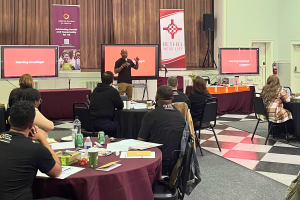
Members of our Results Network cohort gathered in Chicago this week to continue our ongoing journey to find innovative solutions for families that keep them together and change our nation’s child welfare system for the better.

Our United Commitment

With 41 participants from our member organizations as well as additional stakeholders and partners, the two-day session was a testament to our collective commitment to drive change. Guided by the Person Role System approach from the Results Count framework, we are not just dreaming of change, we are actively shaping it. By zooming in on our roles as change agents, we are reshaping systems and moving towards a future where every child has the opportunity to thrive.

During the morning session, we focused on somatic practices to foster resilience. Through activities such as centering and grounding, the introduction to somatic toys, and breathwork, we embraced the journey of personal care, healing, and recognizing the importance of nurturing our own well-being as we advocate for others.

Strategizing for the Future

One of the highlights of the convening was our data walk, where we reviewed the work of each organization, shared insights, and engaged in table conversations. This reflective exercise allowed us to celebrate past achievements and identify areas for growth, all while centering equity and justice in our discussions.

In our final session, we came together to understand and help develop a framing guide that is aimed at simplifying the complexities of our work into plain language. This guide will serve as a powerful tool, enabling us to communicate effectively and inspire others to join our efforts to advance equity in the child welfare space.

Cultivating Genuine Connections

Throughout the convening, we prioritized the cultivation of genuine connections. We know that only together do we as advocates, allies, and change agents have the power to create caring communities that advance health and opportunity for children, youth, and families across the country. We invite you to join us as we continue to be innovative in our pursuit of equity and justice in child welfare.

Renada Johnson is the Senior Director of Children, Youth and Family Initiatives at Lutheran Services in America.
Results Network: A Journey to Transform Communities by Cultivating Caring Communities

September 28, 2023

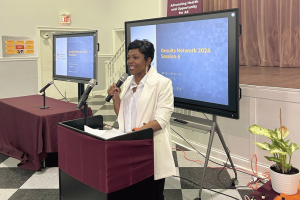
Our Results Network cohort, a part of our Results Innovation Lab, is a dynamic nine-month learning collaborative that brings together leaders from across the Lutheran Services in America network to explore and innovate new strategies and approaches that will reshape how we engage children and families, with a specific focus on racial justice.

Thanks to a new partnership between Lutheran Services in America and the ELCA, grassroots faith-based ELCA church-led organizations and congregations have joined our 2023–2024 cohort to help us answer the question: “What will it take to stabilize families in their communities, ensuring families remain intact, and children do not enter out-of-home care?”

The Results Network is designed to accelerate innovative approaches, revamp how we engage families in crisis, and create pathways to keep families together, especially children, youth, and families who are over-represented in the child welfare system.

This proven approach has produced tremendous results in past years, and we believe that this year’s cohort will contribute immensely to our efforts, having already reached over 25,000 children and families in our Lab to date.

Organizations that have joined this transformative journey will have the opportunity to:

  • Access expertise from across the network and national thought leaders.
  • Become part of a learning community through the exchange of ideas and learning, building lasting, supportive relationships within the network.
  • Develop new approaches to achieve results and engage partners in moving the work forward.
  • Challenge the status quo and identify barriers to improving equitable outcomes for children, youth, and families.

Throughout the year, participants will create results-driven action plans through a step-by-step process by delving into key themes, incorporating and amplifying lived expertise, and utilizing plain language to engage a wider audience in addressing disparities. They will also examine and pursue opportunities to shift policies, practices, resources, and power structures all aimed at supporting and sustaining equitable outcomes for children, youth, and families. The goal is for each organization to consistently achieve measurable and impactful advancements by increasing equitable access to supports and strengthening community networks through a racial equity lens, advancing diversity, equity, and inclusion as a social norm.

Stay tuned for more information on this incredible journey of impact and transformation.

Renada Johnson is Senior Director of Children, Youth and Family Initiatives at Lutheran Services in America.

TOGETHER,

we make life better for children, youth, and families today—and for generations to come.

Our shared Lutheran tradition of service to our neighbor is more vital than ever.

Join us as we work to ensure our network continues delivering essential services to all in need.